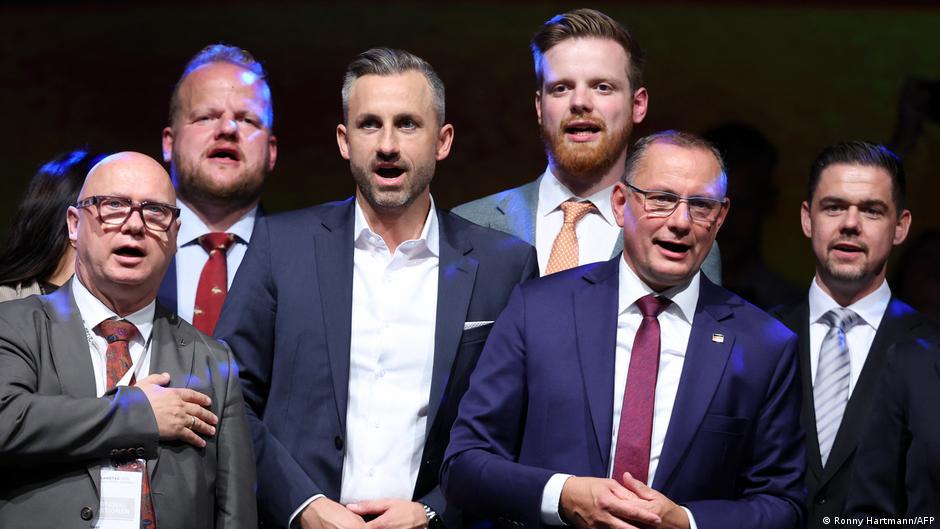
The Alternative for Germany emerged as the strongest force in Saxony-Anhalt’s September 6 state election, winning just under 44% of the vote, according to DW. The result left the far-right populist party narrowly short of an absolute majority and unable to implement its program without support from other parties.
The AfD had presented single-party government as its preferred outcome. It argued that avoiding coalition compromises would allow it to pursue proposals including compulsory work schemes for asylum-seekers, citizen patrols focused on migration-related issues, and an end to public funding for democracy and civic-engagement programs, DW reported.
The party’s stance toward other political forces has made coalition-building difficult. University of Potsdam political scientist Teresa Haussmann told DW that the AfD views other parties as part of a political elite that must be opposed. She said populist parties often treat compromise as evidence that there is not one uniquely correct political path.
AfD lead candidate Ulrich Siegmund offered to work with political forces seeking a “fundamental change of course” in an election-night interview with ARD, but immediately added that he would not bend or compromise. DW said senior AfD politicians soon returned to attacking potential partners, including the center-right Christian Democrats and the Sahra Wagenknecht Alliance.
The Christian Democrats, described by DW as major election losers in the state, are a target of the AfD’s efforts to attract disillusioned conservative voters. Saxony-Anhalt’s security authorities classify the AfD as a “confirmed right-wing extremist” organization, citing in part its questioning of the legal equality of Germans with an immigrant background.
The BSW, which entered the state parliament for the first time, may be the AfD’s only realistic potential partner and has indicated openness to talks. However, DW reported that AfD figures have also attacked the BSW, suggesting that cooperation remains uncertain. AfD leader Oliver Kirchner said another election might be necessary if an AfD-led government could not be formed. Haussmann said Alice Weidel has a strong interest in using a state government as a platform for her ambition to become chancellor.