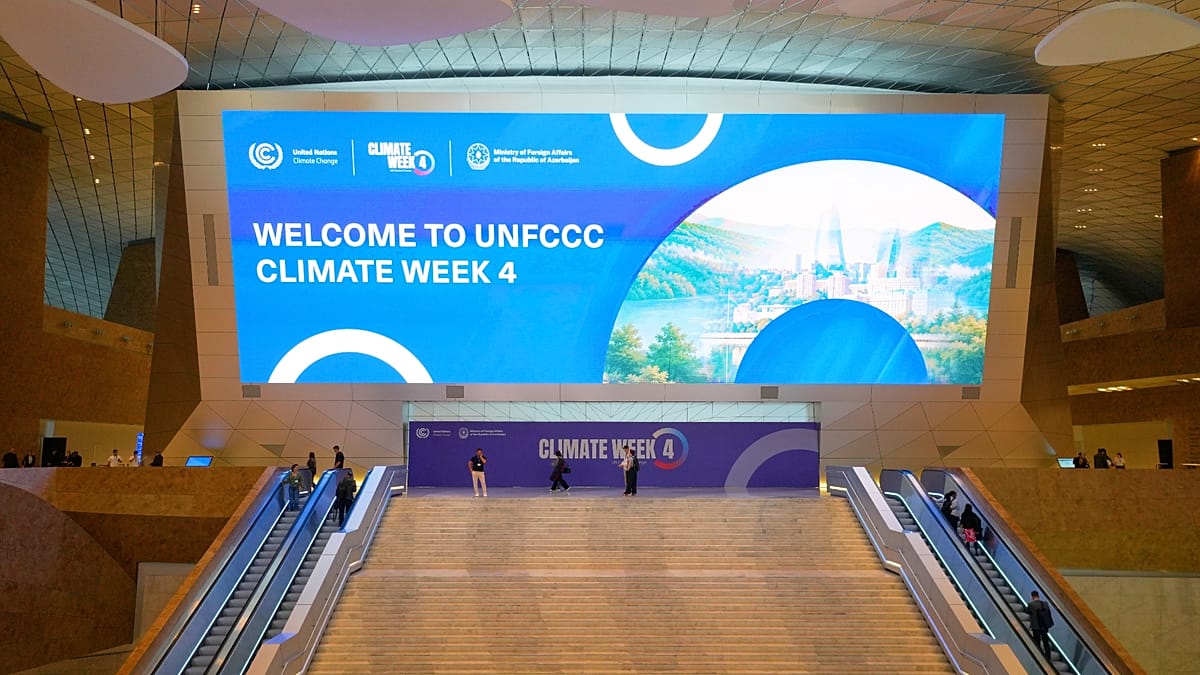
Azerbaijan has committed up to 1 billion manat, or about €540 million, to climate-resilient irrigation infrastructure under a 2026-2030 state programme, according to Agriculture Minister Majnun Mammadov. The announcement came during Baku Climate Action Week, held two years after Azerbaijan hosted COP29.
Mammadov said the investment represented nearly 40% of the state agricultural budget allocated to climate adaptation. The programme is intended to support modern irrigation systems across the South Caucasus, where water shortages, changing growing seasons and soil degradation are increasing pressure on farmers.
The government has also launched an artificial-intelligence-based scoring system developed with the UN Food and Agriculture Organisation. First piloted in 2024 and tested in 2025, the platform provides advance subsidy payments to smallholder farmers managing between five and 100 hectares.
Eligibility is assessed using three factors: whether farmers adopt modern agricultural methods, the economic value of their crops, and their use of water-saving or soil-regenerating techniques. Mammadov said the system considers both farm profitability and the environmental effect of selected crops and practices. International investors in local agricultural infrastructure will have access to the same subsidies as domestic operators, he added.
FAO representative in Azerbaijan Nasar Hayat said agriculture both contributes to climate change and is affected by it. The source material said smallholders across the Caucasus are particularly exposed to climate volatility because relatively small changes in temperature or water availability can destroy yields.
Separately, UNIDO official Petra Schwager urged Azerbaijan to focus first on domestic uses for green hydrogen rather than relying on exports to Europe. She said export pipelines would take years to develop, while green ammonia could be used sooner in fertiliser production and as a shipping fuel.
The measures form part of wider regional efforts to turn climate commitments into projects and financing. Turkey announced BRIDGE and SURF mechanisms ahead of COP31, while Azerbaijan said a subsea cable carrying renewable electricity from the region to Europe remained a priority. At COP29, wealthier nations agreed to provide at least $300 billion annually by 2035 to help developing countries cut emissions and manage climate impacts.