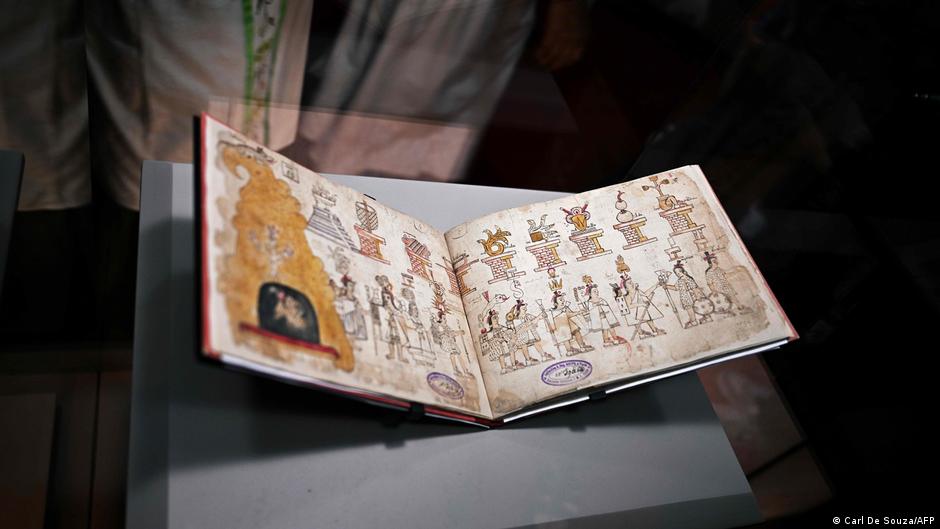
The Azcatitlan Codex, a rare manuscript documenting Aztec history through vivid pictograms and European writing, has returned to Mexico for the first time since 1840. Two folios went on display Thursday at the National Museum of Anthropology in Mexico City, according to DW.
The 16th-century document is considered one of the most important visual records of Aztec history. It traces the Mexica people’s migration from Aztlan, described as the mythical birthplace of the Aztec civilization, to the establishment of Tenochtitlan, now Mexico City. It also depicts the succession of rulers, the arrival of Spanish forces and the subsequent evangelization, Mexico’s National Institute of Anthropology and History said.
The codex has been held by France’s Bibliothèque Nationale since 1898. Its return is a loan rather than a permanent restitution and coincides with celebrations marking 200 years of diplomatic ties between Mexico and France. The document is scheduled to remain on display until December.
At the inauguration, Mexican Foreign Minister Roberto Velasco described the exhibition as a reunion between a population and its collective memory. He said the manuscript’s pictograms represented the history, written voice and ancestral identity of Mexico’s people.
The display drew an enthusiastic response from members of Indigenous communities. Emilia Mendoza of the Hnahnu community called the exhibition a “first step” toward returning similar books held abroad. Maria Eugenia Castaneda, representing Mexica peoples, said the codices continued to reinforce their identity, customs and culture.
According to Mexican historians, an Indigenous Otomi craftsman created the codex. As part of the exchange, Mexico is lending France the Codex Boturini, another historical document depicting the migration of the Aztec people to the Mexican valley.