For Marie Rolshoven, the threshold of her fourth-floor apartment in Berlin carries a history that predates her family’s arrival. She has lived at Rosenheimer Straße 40 since 2007 and knows that Jewish residents once occupied the home; none survived the Nazi era. “The feeling of crossing that threshold, the same one the former residents crossed for the last time, stays with you,” she says.
The apartment was among those affected by the Nazi regime’s campaign to remove Jews from ordinary housing. After the Nazis came to power in 1933, Jewish residents increasingly lost legal protection and the right to remain in their homes. A 1938 article in the Nazi party newspaper argued that landlords should be able to terminate Jewish tenants’ leases, and a law taking effect in April 1939 forced Jewish tenants and property owners into buildings designated by the authorities as “Judenhäuser.”
Several people were then crowded into Henny and Carl Möller’s apartment at Rosenheimer Straße 40. There were eventually nine residents. Beginning in autumn 1941, the Nazi authorities systematically deported Jews to ghettos and camps in Eastern Europe; the residents of the building were among those later deported, according to the supplied account.
Rolshoven and her late mother helped establish Denk Mal Am Ort in 2016, together with a friend, drawing inspiration from the Amsterdam project Open Jewish Homes. The initiative holds commemorative events at former homes rather than limiting remembrance to formal memorials. “You feel a strong connection to these individuals through the actual site,” Rolshoven says.
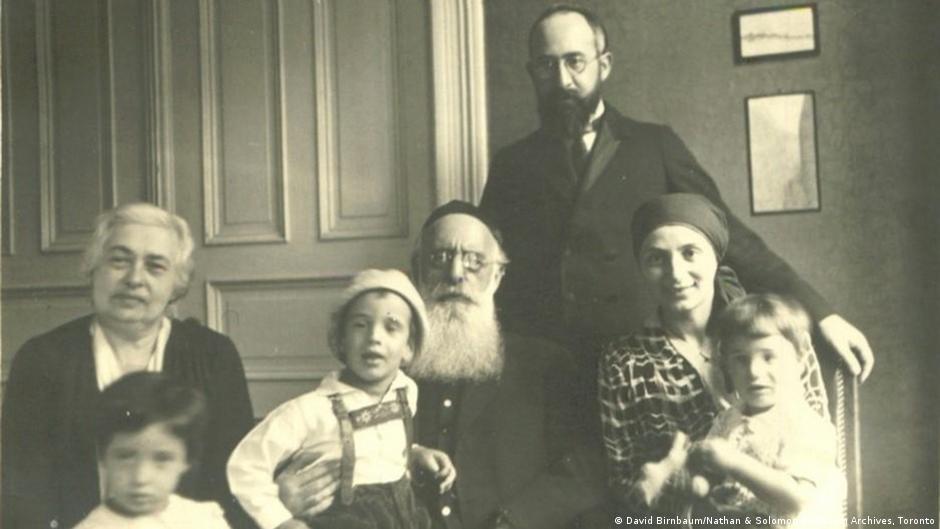
The project also helped identify the Katzenellenbogen family as former residents of another apartment in the building. Joel Ludwig Katzenellenbogen, who escaped Nazi Germany in 1939, returned in 2018 with relatives and recognized the layout, recalling where his brother’s bed had stood. His later death, along with that of many other eyewitnesses, has reinforced Rolshoven’s view that memories must be passed between generations.
The initiative has connected descendants with spaces that hold family histories, including the apartment where Claudia Samter’s aunt was once housed. It has also encouraged younger people such as Adam Ethan Klein to investigate their ancestry. Klein found documents in a family suitcase, including a 1933 letter removing his great-grandfather, attorney Max Haas, from the list of licensed lawyers. He says the discovery clarified how Nazi persecution reduced a family’s identity to the category of “Jews,” and that contemporary antisemitism strengthened his determination to research and share the past.