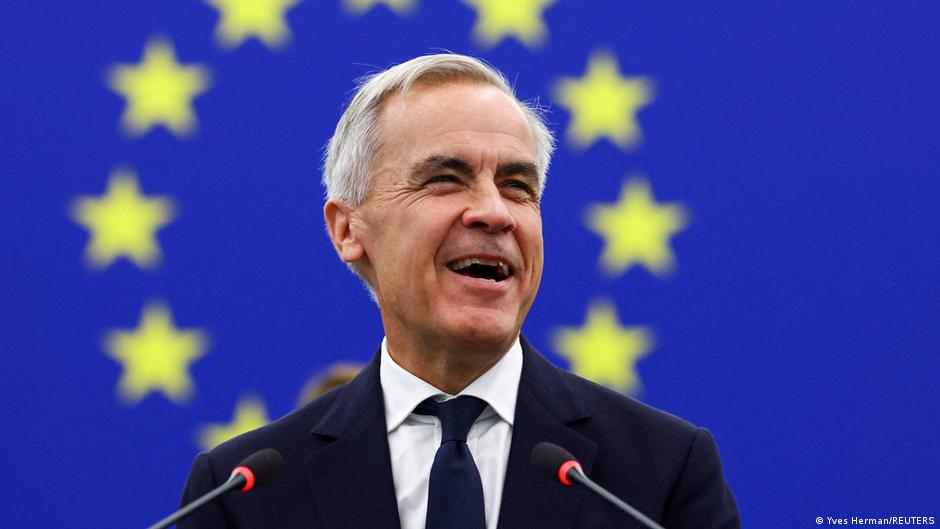
Canada and the European Union are considering closer political ties, with European Commission President Ursula von der Leyen suggesting that Canada could become the bloc’s first associate member. DW reported that the proposal came as both sides seek effective responses to US tariffs, but the EU has not created an associate-membership framework, leaving the possible arrangement undefined.
The relationship would be distinct from full EU membership. Canadian Prime Minister Mark Carney said Canada and the EU share commitments to the rule of law, human dignity, individual freedom and democracy. Von der Leyen similarly said the two sides “see the world with the same eyes,” according to the source.
DW points to the European Free Trade Association as one existing model for close cooperation. Iceland, Liechtenstein and Norway are part of the EU’s internal market and participate in the Schengen area, allowing the free movement of people, goods and services. They follow many EU rules, including in tourism, the environment and education, but have no formal role in EU decision-making, are outside the customs union and do not use the euro.
Switzerland has developed a different arrangement through more than 120 bilateral agreements covering trade, transport, security and education. It is also part of Schengen, enabling movement across borders, and more than 1.5 million EU citizens live and work there, while 466,200 Swiss citizens have moved in the opposite direction, DW reported. Switzerland contributes financially to some EU member states and joins selected programs and research projects, but has no voting rights and adopts only some EU laws.
The United Kingdom has a looser relationship following its departure from the bloc. After the 2016 referendum, the parties negotiated a trade and cooperation agreement that gives the UK limited EU market access and preserves alignment in some policy areas. The UK is outside the single market and customs union, and free movement between Britain and the EU has ended.
DW also described the EU’s accession process for Albania, Bosnia and Herzegovina, Kosovo, Montenegro, North Macedonia and Serbia. Those countries must become candidates, negotiate with the bloc and secure approval and ratification of an accession treaty. The EU has not admitted a new member since Croatia in 2013, while Ukraine, Serbia and Montenegro are among those involved in accession negotiations.