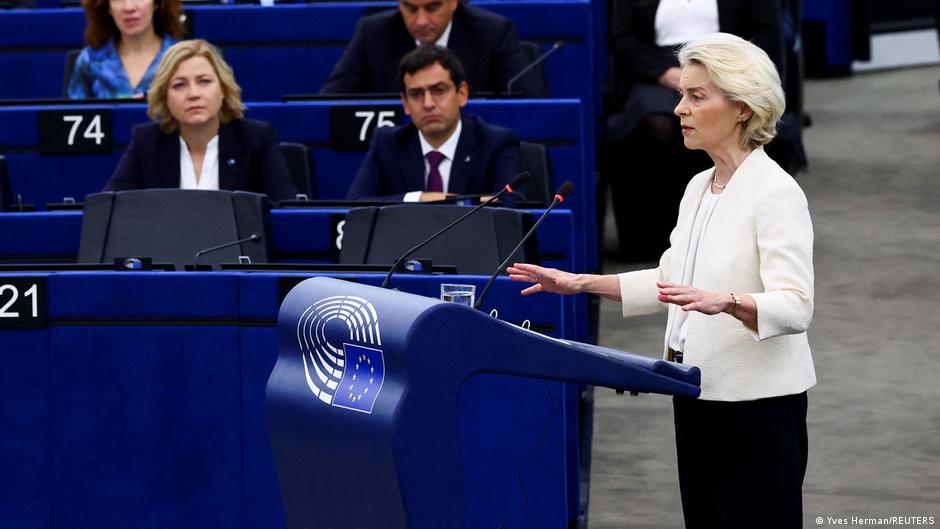
European Commission President Ursula von der Leyen has unveiled a proposal to limit children’s access to social media and strengthen protections for people under 18. The initiative would seek to prevent children younger than 13 from opening accounts on platforms including Facebook, TikTok and Instagram.
Von der Leyen said there was growing agreement that social media should have a defined minimum joining age and called for “age-appropriate restrictions.” She said the proposed reform to the EU Kids Act would set clearer boundaries for children in digital spaces, amid concerns about the effects of social media on children’s mental health.
The plan would give parents greater control over the accounts of young people aged 13 to 15. It would also cover social media, video streaming services, online video games and chatbots aimed at users under 18. Proposed rules would ban or limit features described as addictive, including infinite scrolling and autoplay content, as well as restrict algorithm-driven recommendations, personalized profiling and reward-based engagement systems.
The initiative includes measures against unsolicited contact from strangers and calls for child-safe designs, algorithms and accessible parental controls. Major technology companies would also have to improve age-verification systems for people opening accounts and devote more resources to content supervision and moderation.
Companies that fail to comply could face fines of up to 6% of their global annual revenue. The proposal will be discussed by EU member states and the European Parliament in the coming months before it can become law.
CCIA Europe, which represents major technology companies including Google and Meta, warned that the proposed age checks could create privacy risks. Its director, Daniel Friedlaender, said collecting age information, identity documents and data connecting children with parents or guardians could create targets for cybercriminals, while overlapping EU rules could weaken protections for children and consumers.