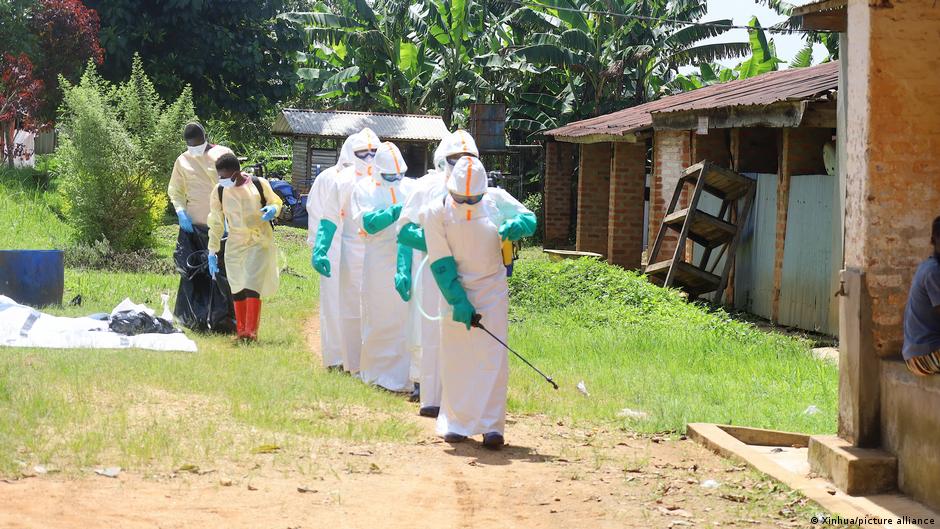
The Democratic Republic of Congo declared an outbreak of Ebola caused by the Bundibugyo variant on May 15, but evidence cited by DW suggests infections were occurring much earlier. The exact start remains disputed, although several investigations point to circulation weeks or months before the official announcement.
The first retrospectively identified case was a health worker from Mongbwalu in Ituri Province who reportedly developed Ebola-like symptoms around April 24 or 25 and later died in Bunia. The WHO said it was informed on May 5 of an unknown disease with a high mortality rate in the Mongbwalu health zone. Laboratory confirmation by the National Institute for Biomedical Research in Kinshasa followed before the government’s declaration.
The Africa Centres for Disease Control and Prevention said the roughly three-week interval between the suspected first case’s symptoms and laboratory confirmation reflected a low initial level of clinical suspicion among local health workers. In its assessment, that delay facilitated wider geographic spread before containment measures began.
Reports gathered by DW describe suspicious deaths in Mongbwalu as early as late April. A Red Cross report dated May 16 said widespread fear had existed in the area since March 30 after a series of deaths involving symptoms including high fever, exhaustion, vomiting, nosebleeds and loss of consciousness. The report linked some transmission to contact with a body and a contaminated coffin, but said the deaths could not be definitively attributed to Bundibugyo virus.
A study by US Centers for Disease Control and Prevention researchers, published in the Morbidity and Mortality Weekly Report, found that an animal-to-human transmission between mid- and late February was plausible. WHO Africa Regional Director Mohamed Janabi later said genome sequencing suggested the outbreak may have begun as early as February 2026, with some early infections mistakenly identified as malaria or typhus.
Janabi also told DW that authorities had access to only about one-third of patients during the first three months. Research cited by DW further suggests that monitoring unusual animal deaths could provide earlier warnings in future outbreaks, though the cited study did not cover the 2026 epidemic.