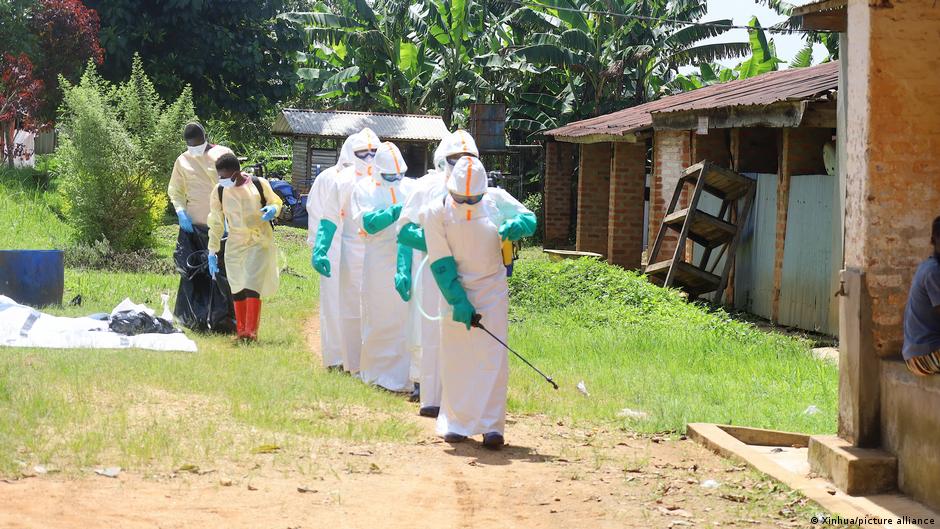
The Democratic Republic of Congo declared an outbreak of the Bundibugyo variant of Ebola on May 15, but evidence cited by DW suggests infections may have begun substantially earlier. The precise start remains disputed, while international organizations have criticized delays in the initial response.
WHO and the Africa Centres for Disease Control and Prevention identified a health worker from Mongbwalu, in Ituri Province, as the first known case found retrospectively. The worker reportedly developed Ebola-like symptoms around April 24 or 25 and later died in Bunia, the provincial capital. About 80% of reported cases have been recorded in Ituri.
The WHO said it was informed on May 5 of an unknown illness with a high mortality rate in Mongbwalu. Laboratory tests in Kinshasa subsequently confirmed the Bundibugyo virus, and the government announced the outbreak ten days later. The Africa CDC said the roughly three-week interval between the first suspected case’s symptoms and laboratory confirmation indicated low initial clinical suspicion and may have facilitated geographic spread.
Reports collected by DW indicate that residents had described suspicious deaths in Mongbwalu as early as late April. A Red Cross report dated May 16 said widespread fear had followed a series of deaths since March 30, with symptoms including fever, exhaustion, vomiting, nosebleeds and loss of consciousness. It linked the concern to a funeral involving a body and a contaminated coffin, but the report could not establish that those deaths were caused by Ebola.
A CDC study published June 11 found that an animal-to-human transmission between mid- and late February was plausible. Mohamed Janabi, the WHO regional director for Africa, later said genome sequencing pointed to the outbreak beginning as early as February 2026, while noting that some early infections had been mistaken for malaria or typhus. Janabi also told DW that authorities had accessed only about one-third of patients over three months.
Researcher Jules Villa told DW that reports of unusual animal deaths had preceded earlier Ebola epidemics in northeastern Congo. His work does not cover the 2026 outbreak, but he argues that monitoring livestock, including reports from farmers and veterinarians, could provide an earlier warning of future outbreaks.