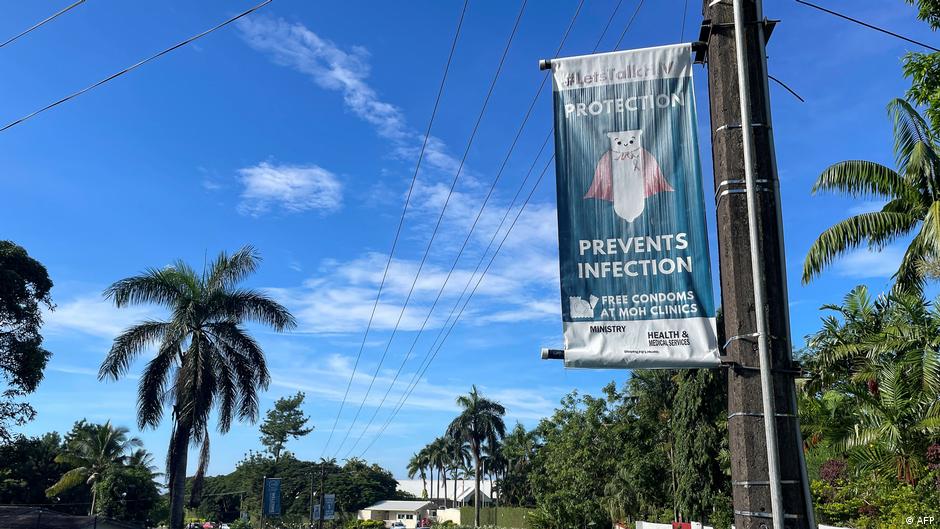
Fiji has declared HIV a national health crisis after reporting a sharp increase in diagnoses and estimated prevalence. The government said it would pursue a “whole-of-government response” to expand services and protect communities across the Pacific island nation.
The government recorded 2,016 new HIV diagnoses in 2025, compared with the number reported in 2019, according to the supplied source. It said known adult prevalence had nearly tripled over five years, rising from one in 167 adults to an estimated one in 60. Fiji has a population of slightly more than 900,000 people.
The government also reported that two in every 100 pregnant women were living with HIV in 2025. It said 59 babies were born with HIV that year and 18 died before reaching their first birthday. The figures suggested the virus was affecting the wider population as well as groups previously regarded as being at higher risk, the government said.
Authorities said increased testing was helping health services identify infections that may previously have gone undetected, after a period of slower surveillance began about a decade ago. Fiji plans to provide wider access to free and confidential testing, prevention medicine for people at high risk, harm-reduction services for people who inject drugs and free treatment for people diagnosed with HIV.
Health Minister Ratu Atonio Lalabalavu and four other cabinet ministers will form a committee intended to remove barriers to faster action. The government said the response would focus on saving lives, improving access to care and reducing stigma, with support from Australia, New Zealand, India, the Global Fund and the United Nations.
UNAIDS welcomed the declaration. The organisation said more than half of cases with a known transmission mode were linked to sexual transmission and more than 42% to injecting drug use. It estimated that 9,100 people were living with HIV in Fiji in 2025, but said only 39% knew their status and 22% were receiving antiretroviral treatment. UNAIDS said the declaration should prompt action rather than fear, noting that HIV is not spread through everyday contact and that effective treatment can prevent sexual transmission when the virus is undetectable.