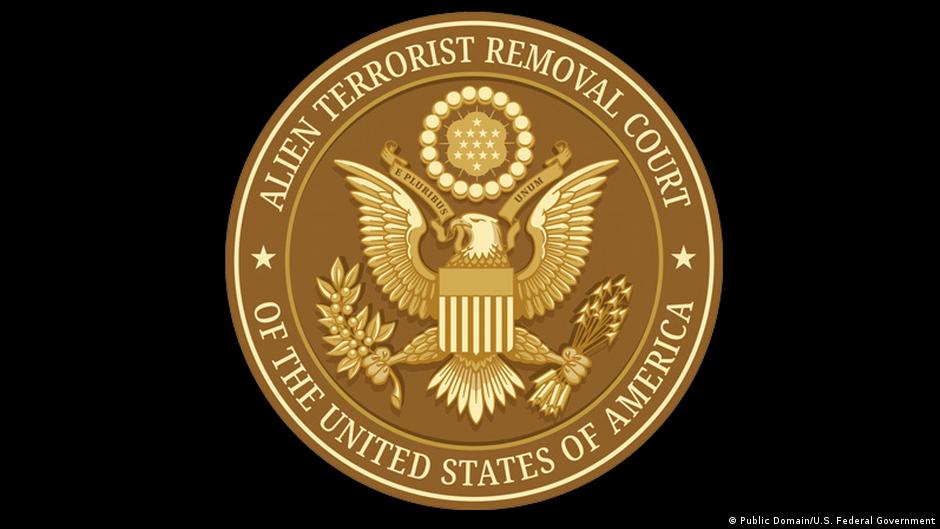
The United States has used the Alien Terrorist Removal Court (ATRC) for the first time in its 30-year history, in a case involving Nazira Haji Zada, a 47-year-old Afghan national who held legal permanent residency and lived in Texas. The Department of Homeland Security said she returned to Afghanistan after conceding that she was an “alien terrorist” and waiving an appeal of her removal order.
Attorney General Todd Blanche called the case a victory for national security and the rule of law. The ATRC was established after the 1995 Oklahoma City bombing to handle deportation cases involving non-US citizens accused of terrorism when evidence is confidential or connected to national security. The court is made up of five federal trial judges selected by the chief justice of the US Supreme Court.
Prosecutors accused Haji Zada of being the “matriarch” of a family in which her son, Abdullah Haji Zada, and son-in-law, Nasir Ahmad Tawhed, were convicted of plotting a mass shooting on election day in 2024. Earlier this year, Blanche described the family as “ISIS-sympathizing”. The supplied material does not detail the evidence against Haji Zada, while DHS said it had provided her and her lawyers with half a terabyte of documents.
Haji Zada’s public defenders, Matthew Farley and Mary Manning Petras, said the case should not be viewed as an endorsement of the court’s legitimacy. In a statement to the Washington Post, they argued that bringing lawful permanent residents before a court while withholding the evidence used against them violates due process and predicted the ATRC would be struck down if its constitutionality were litigated.
Hiroshi Motomura, a UCLA law professor, told DW that the court offers the government a procedure combining disclosure to a judge with secrecy from the person facing removal. He said the government must establish probable cause that someone meets the immigration-law definition of an “alien terrorist” and show why ordinary deportation proceedings would pose a national security risk. At a hearing, the government would need to prove its case only by a preponderance of the evidence.
Because Haji Zada left the country before a hearing, the case did not test whether the ATRC’s procedures comply with the US Constitution. Motomura said the administration may use the court again as part of its broader immigration policy, but the legal implications remain uncertain.