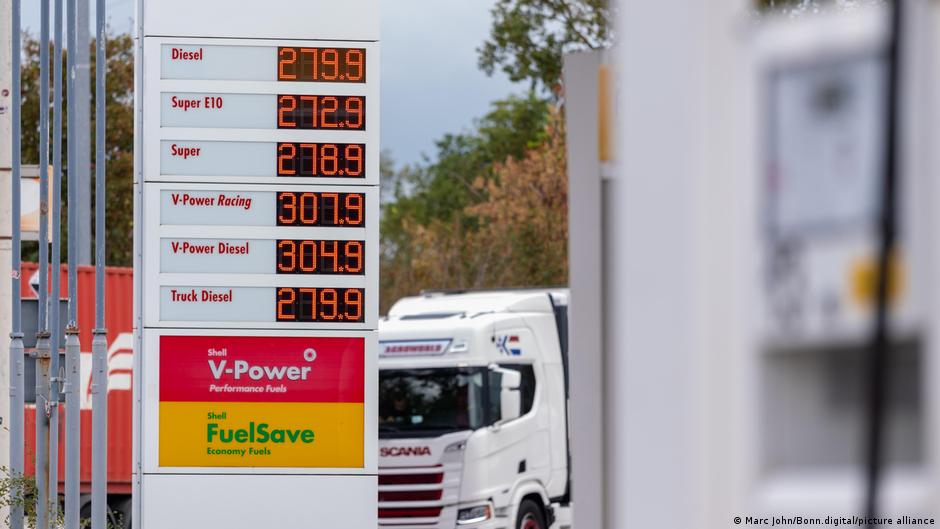
Fuel prices are putting pressure on drivers in Germany as the federal government debates how to respond. According to the supplied DW report, E10 gasoline in Berlin cost about €2.25 per liter and diesel about €2.37 on the morning of Sept. 15. Prices rose by roughly €0.20 at noon, when stations are permitted to change prices, and Super Plus reached €3.03 per liter at a highway station in southern Berlin.
The burden is especially difficult for rural residents, who have fewer alternatives to driving than people in large cities. Drivers living near Germany’s borders can sometimes save by filling up abroad. Federal Statistical Office figures cited by DW show that, on Sept. 7, a 60-liter tank of E10 was about €31 cheaper in the Czech Republic and Poland, €28 cheaper in Luxembourg and €25 cheaper in Austria than in Germany. Fuel was cheaper in seven of Germany’s nine neighboring countries for gasoline and in six for diesel.
Chancellor Friedrich Merz said many people who depend on their cars daily had reached “their breaking point” and promised that a proposal would be announced soon. However, he said the precise measures had not yet been decided. Deputy government spokesperson Steffen Meyer rejected the idea that federal government actions were chiefly responsible for the price increases, attributing them largely to developments in the Middle East, attacks on oil pipelines and disrupted shipping routes.
The ADAC automobile club has called for greater transparency in refinery and wholesale markets, noting that E10 is more expensive than ever despite oil prices remaining below earlier peaks. Herbert Rabl of the Gas Station Interest Group accused oil companies of protecting their profit margins, according to the report. The government says its room for broad subsidies is limited by strained public finances. Economy Minister Katherina Reiche said the coalition could not repeat the earlier fuel rebate, which temporarily reduced energy taxes and was expected to cut prices by about €0.17 per liter.
Conservative coalition politicians are considering commuter tax relief or direct assistance for low-income earners. The SPD instead supports a government-imposed fuel-price cap, a temporary energy-tax reduction and an excess-profits tax on energy companies. Finance Minister Lars Klingbeil is expected to advocate the latter at an EU finance ministers’ meeting, while officials say the measure is being discussed at European level. The debate is unfolding before regional elections in Mecklenburg-Western Pomerania and another state on Sept. 20, with the AfD proposing lower fuel taxes and value-added tax.