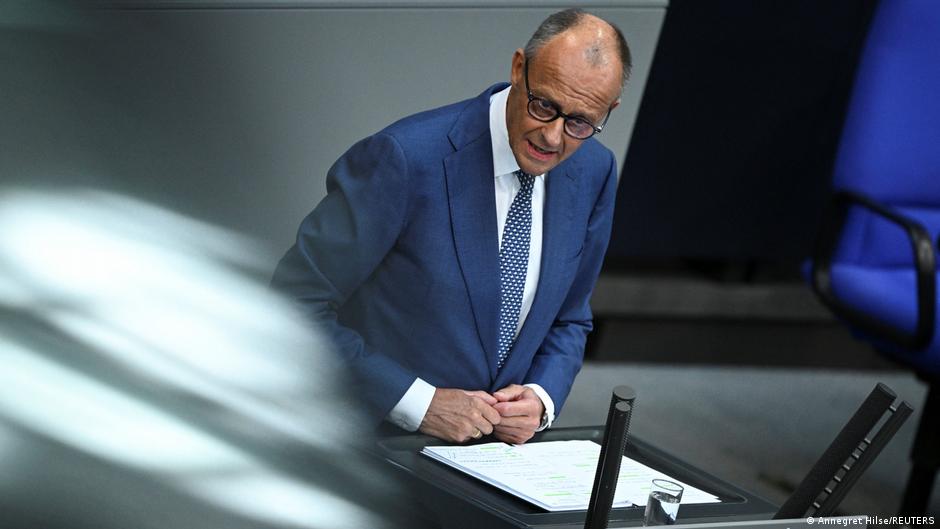
Chancellor Friedrich Merz is under pressure after only 13% of respondents in the latest Deutschlandtrend survey said he was doing a good job. The poll, conducted by Infratest-Dimap for German public broadcaster ARD in early September, came after Merz’s CDU suffered a major setback in the Saxony-Anhalt state election. According to DW, the result has encouraged criticism both from outside and within the party, including over Merz’s communication style.
Despite the criticism, Germany’s Basic Law gives the chancellorship strong protection. DW identifies three possible paths to a change. Merz could resign, although that would not necessarily end the governing coalition. In 1974, Chancellor Willy Brandt resigned after a spy from communist East Germany was discovered in his inner circle. The SPD and Free Democrats continued governing, and Finance Minister Helmut Schmidt was elected chancellor 10 days later by an absolute majority of all Bundestag lawmakers.
A second route would be a constructive vote of no confidence. Under this mechanism, lawmakers do not simply vote against the chancellor; they must also support a replacement who can command a parliamentary majority. DW cites 1982, when Helmut Schmidt lost the support of the FDP, which then joined the CDU and CSU to elect CDU leader Helmut Kohl. Kohl replaced Schmidt and remained chancellor for 16 years.
DW describes such a move against Merz as very unlikely. The CDU/CSU and Social Democrats do not want to end their coalition, and there is no established rival candidate. North Rhine-Westphalia Premier Hendrik Wüst is viewed as a possible successor but has not stepped forward. The report also says the CDU is generally loyal to its leaders, making an open parliamentary challenge especially difficult.
The third possibility involves a confidence vote initiated by the chancellor. If the government loses, the chancellor may ask the German president to dissolve the Bundestag and call new elections, although the president is not required to agree. Merz has said he sees no reason to call such a vote, and neither coalition partner is interested in elections while its approval ratings are low. DW therefore concludes that, despite the fluid political situation, Merz is likely to remain in office for now.