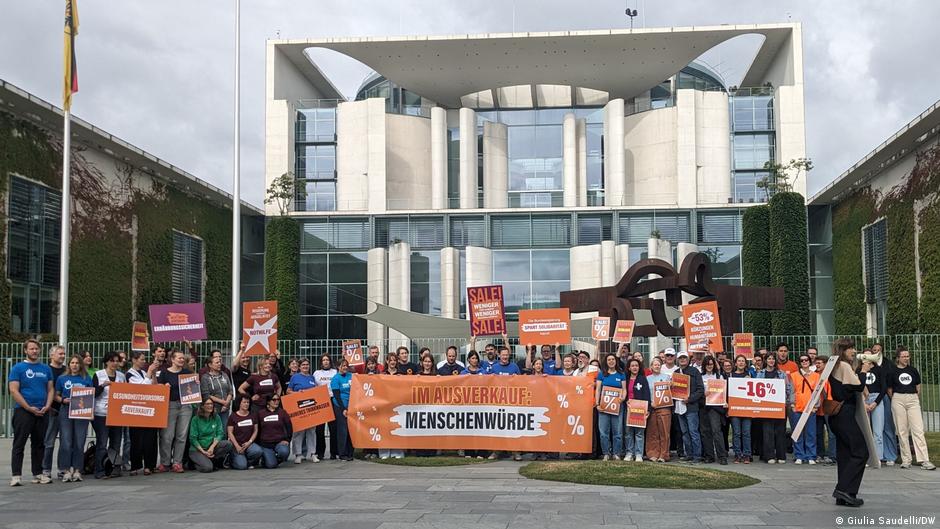
Germany’s Economic Cooperation and Development Ministry is set to receive just under €9.5 billion under the federal government’s proposed 2027 budget, according to DW. That would mark the fifth consecutive annual reduction and a decline of roughly one-third from the nearly €14 billion allocated in 2022.
Development Minister Reem Alabali Radovan opened the Bundestag debate by pointing to floods, heat waves, wildfires, drought and crop failures. She said millions of people face hunger and argued that the climate crisis cannot be addressed by countries acting alone. In January, Radovan described development policy as an increasingly important part of Germany’s security strategy, alongside diplomacy and defense.
Aid organizations have questioned how that objective can be reconciled with falling funds. Michael Herbst of VENRO, an umbrella group for about 150 development and humanitarian NGOs, said the reductions were worsening an already critical situation. He also criticized the Foreign Office’s humanitarian aid budget, which has remained at €1 billion since 2025 after exceeding €3 billion in 2022.
VENRO said a survey of 34 member organizations found that more than 10 million fewer people were being reached by funded projects among those organizations alone. Herbst added that many local partner groups could no longer operate and that the full consequences of the cuts might not become apparent for another three to four years. VENRO is seeking higher funding for efforts against hunger and exemptions for development and humanitarian assistance from Germany’s debt brake.
The spending reductions are part of broader efforts to consolidate the federal budget after Germany increased defense spending following Russia’s invasion of Ukraine, DW reported. Green lawmaker Jamila Schäfer said security depended not only on military capabilities but also on international stability. By contrast, conservative lawmaker Nicolas Zippelius said every ministry had to contribute to fiscal consolidation and that smaller budgets could encourage clearer priorities.
Jan Sebastian Friedrich-Rust of Action Against Hunger called the planned cuts “short-sighted and dangerous.” In a written statement to DW, he said the organization estimated that as many as 22.6 million people worldwide could die by 2030 as a result. The alliance separately submitted a petition opposing cuts to international aid that had gathered about 100,000 signatures.