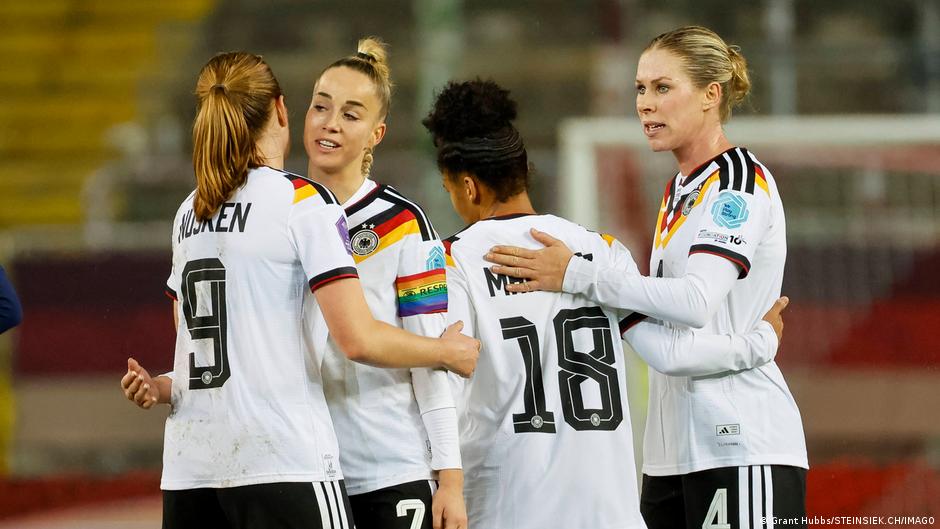
Women’s football in Germany is gaining momentum, with investment by professional clubs rising 135% over the past six years, according to figures from the German Football Association (DFB) cited by DW. The number of girls playing football in Germany has also increased by about 30% since 2022.
Celia Sasic, the former Germany striker who has led diversity and inclusion work at the DFB since 2022, told DW that the association had created clearer structures for the women’s game, including a separate department with its own sports director. She said defined responsibilities were important for the sport’s development and professionalization, and argued that women’s football needed to be fully recognized within licensed clubs.
The growing audience has provided evidence of that potential. The Germany-Spain semifinal at the 2025 Women’s European Championship was the most-watched football match involving a German team that year, attracting about 14.26 million viewers and a 57.6% market share. DW reported that the figure exceeded the roughly 10 million viewers for Germany’s men’s Nations League semifinal against Portugal.
Despite the progress, the financial gap remains substantial. The 18 men’s Bundesliga clubs spent €1.72 billion on players and coaching staff in the 2024–25 season, while personnel expenses for the 12 Women’s Bundesliga clubs most recently totaled just under €30 million, according to DFB and German Soccer League figures cited by DW. The report said the women’s figure was about 60 times lower.
Pay levels also underline the difference in professional resources. A Women’s Bundesliga player earned an average base salary of about €48,000 in 2023–24, while Bayern Munich forward Harry Kane was estimated to have earned €25 million in the same season. Former German Foreign Minister Annalena Baerbock told DW that football reflects wider gender inequality, but said the gap could narrow if countries invest seriously in the women’s game and address equal pay, particularly for tournament bonuses.
Sasic said clubs still needed to provide pitches, medical support, fitness facilities and coaching staff, along with stronger youth development centers. A DFB rule introduced for the 2025–26 season requires Women’s Bundesliga teams to employ assistant, goalkeeper and athletic coaches full time. Sasic views the 2027 Women’s World Cup in Brazil as a possible next catalyst for the sport’s growth and audience reach.