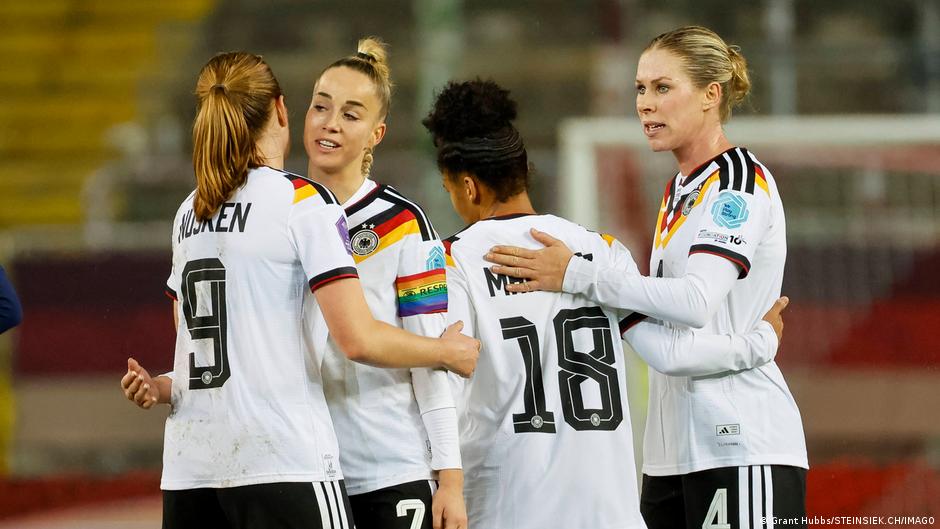
Investment in women’s football by Germany’s professional clubs has risen by 135% over the past six years, while the number of girls playing the sport has increased by about 30% since 2022, according to the German Football Association (DFB). The figures point to rapid growth, although major differences with the men’s game remain.
Celia Sasic, the former Germany striker and the DFB’s diversity and inclusion chief since 2022, told DW that new structures had brought women’s football further into the organization. The DFB now has a separate department with its own sports director, which Sasic said would help clarify responsibility for the sport’s development and professionalization.
Public interest has also expanded. The most-watched football match featuring a German team in 2025 was the Women’s European Championship semifinal between Germany and Spain, which attracted about 14.26 million viewers and a 57.6% market share. The men’s Nations League semifinal against Portugal drew around 10 million viewers, according to the supplied figures.
Despite that audience, the financial gap remains substantial. The 18 men’s Bundesliga clubs spent €1.72 billion on players and coaching staff in the 2024–25 season, while personnel expenses for the 12 Women’s Bundesliga clubs most recently totaled just under €30 million. In the 2023–24 season, the average base salary for a Women’s Bundesliga player was about €48,000 a year; Bayern Munich striker Harry Kane was estimated to have earned €25 million during the same season.
Former German Foreign Minister Annalena Baerbock told DW that football reflects wider gender inequality and said the gap could change when countries make sustained investments in the women’s game. Sasic said clubs still need to provide pitches, medical care, fitness facilities and coaching staff, as well as stronger youth development centers.
Professional standards are still being built. Since the 2025–26 season, Women’s Bundesliga teams have been required to employ full-time assistant coaches, goalkeeper coaches and athletic coaches. Sasic sees the 2027 Women’s World Cup in Brazil as an opportunity for Germany to generate further interest and potentially set new viewing records.