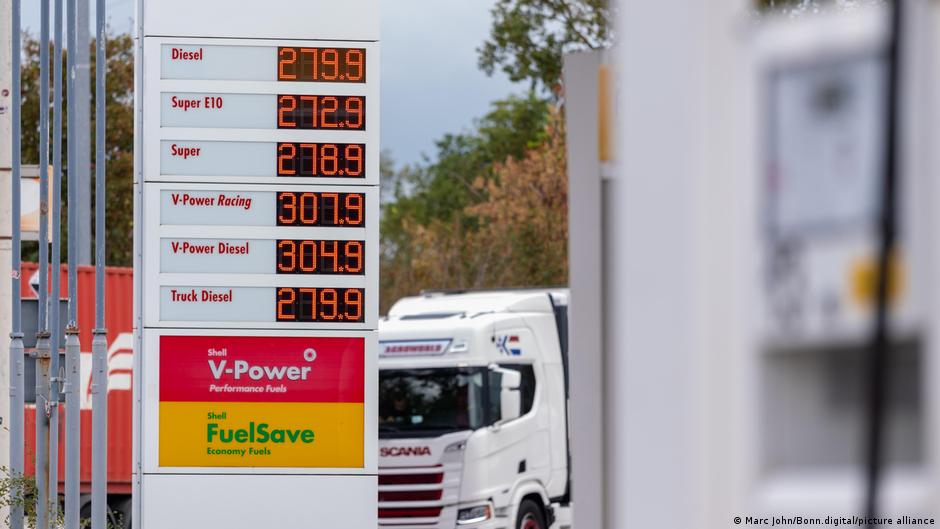
Fuel prices in Germany are intensifying pressure on drivers and the federal government. On the morning of September 15 in Berlin, E10 gasoline cost about €2.25 per liter and diesel about €2.37, according to the supplied report. At noon, prices rose by roughly €0.20 per liter. Super Plus reached €3.03 per liter at a highway station in southern Berlin.
The report said the burden is particularly difficult for people outside major cities, where public transportation offers few practical alternatives. Drivers in border regions can sometimes save money by filling up abroad. Based on Federal Statistical Office calculations, a 60-liter tank of E10 on September 7 cost about €31 less in the Czech Republic and Poland than in Germany. The gap was €28 in Luxembourg and €25 in Austria. Of Germany’s nine neighboring countries, fuel was reported to be cheaper in seven for gasoline and six for diesel.
Chancellor Friedrich Merz has promised relief but has not specified the form it will take. Speaking at a German Foreign Trade Association event in Berlin, Merz said many people who rely on their cars daily had reached “their breaking point” and that the government must act. He said officials were discussing “exact measures” with the federal states and that a proposal would be announced soon.
Government deputy spokesperson Steffen Meyer attributed the sharp rise largely to the escalating situation in the Middle East, attacks on oil pipelines and shipping-lane blockades. The report also noted that Germany imposes higher fuel taxes and levies, while the ADAC automobile club has called for greater clarity about refinery and wholesale markets. Herbert Rabl of the Gas Station Interest Group accused oil companies of preserving their margins, a claim reported by the Rheinische Post.
The governing CDU/CSU and SPD face tight public finances. Economy Minister Katherina Reiche said another fuel rebate was not currently affordable after a temporary energy-tax reduction was introduced from May 1 through June 30, 2026. Conservatives are considering commuter tax relief or direct support for low-income earners, while the SPD favors a fuel-price cap, temporary energy-tax cuts and an excess-profits tax on energy companies. The Finance Ministry said Minister Lars Klingbeil would promote such a tax at an EU finance ministers’ meeting in Dublin. Regional elections on September 20 are adding urgency to the debate, with the AfD also proposing significant tax reductions on fuel.