Hong Kong expands AI funding for healthcare, finance and public services
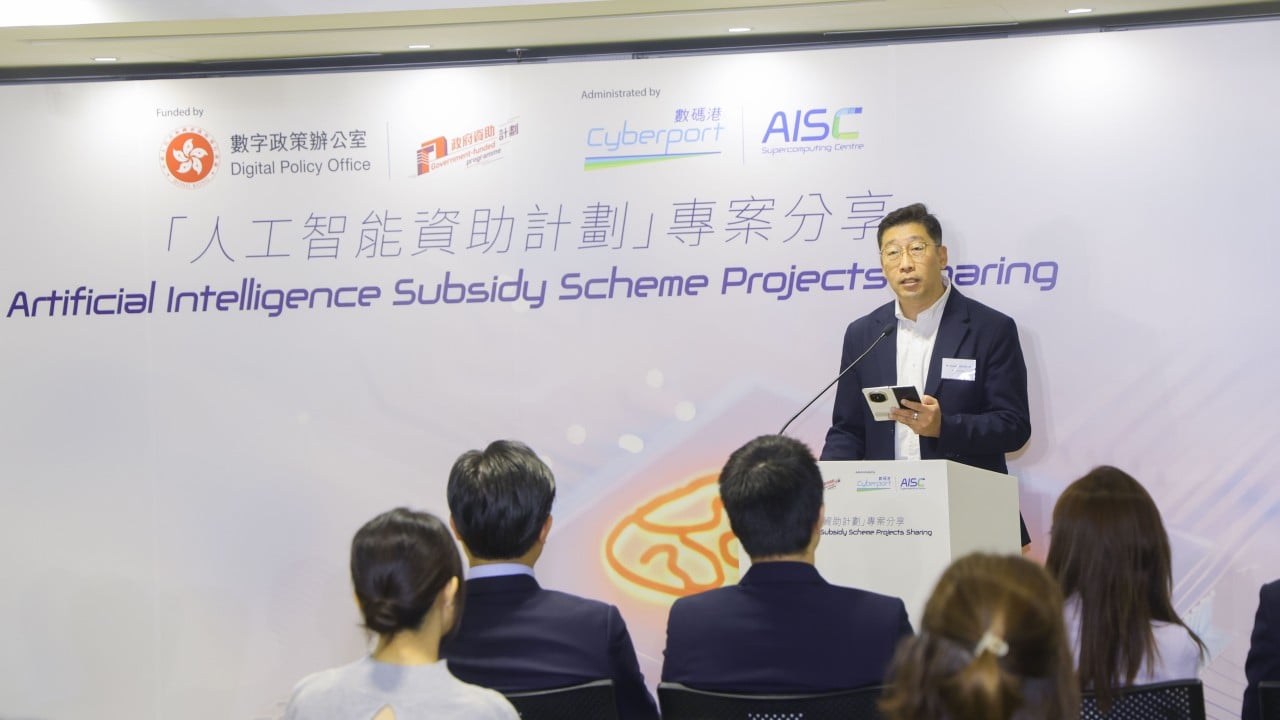
Hong Kong is using a HK$3 billion subsidy programme to move artificial intelligence projects from research into practical applications. More than 30 projects have received approval since 2024, covering medicine, finance and other sectors. Officials say the initiative is intended to strengthen innovation, improve services and support wider economic development.
Hong Kong is expanding support for artificial intelligence applications through a HK$3 billion Artificial Intelligence Subsidy Scheme, with officials presenting the programme as a way to move beyond research and deliver practical economic and social benefits. The three-year scheme supports universities, research institutions, companies and government departments using the computing capacity of Cyberport’s Artificial Intelligence Supercomputing Centre. The source material says Hong Kong’s overall computing capacity has exceeded 5,000 petaFLOPS.
Since the scheme began in 2024, it has received more than 50 applications and approved over 30 projects. Subsidies awarded have exceeded HK$1.7 billion. The projects involve universities, research centres, government departments, technology companies and start-ups.
Daniel Cheung, Acting Commissioner for Digital Policy, said the programme supported the development of “industries for AI” and “AI for industries”, including the upgrading of traditional sectors such as finance and healthcare. Hendrick Sin, chairperson of the scheme’s committee, said approved projects were being developed into applications intended to benefit society and industry. One project, led by the Centre for Artificial Intelligence and Robotics under the Chinese Academy of Sciences’ Hong Kong Institute of Science & Innovation, focuses on medical diagnosis and surgery.
Its CARES 3.0 system is described as a multimodal medical model with continual learning and decision-making functions. The centre’s EchoCare ultrasound model was trained on four million datasets and can be adapted to clinical uses involving more than 50 organs, according to the source material. CAIR director Liu Hongbin said the technology had been implemented in hospitals in Hong Kong and mainland China.
Liu said surgical report preparation had fallen from two hours to 15 minutes, while echocardiogram scanning had dropped from 16 minutes to six. He also said daily cases handled per physician had risen from 25 to more than 60, and AI-assisted diagnostic accuracy had exceeded 90%. In finance, the Hong Kong Monetary Authority and Cyberport have tested generative AI in anti-fraud work, risk management and customer services.
A further Sandbox++ programme, launched in March 2026 with other financial regulators, is examining more autonomous applications including customer onboarding, payments and insurance claims.
This independently written report is based on information supplied by the named publisher. Vertrix News has not independently verified the source report.