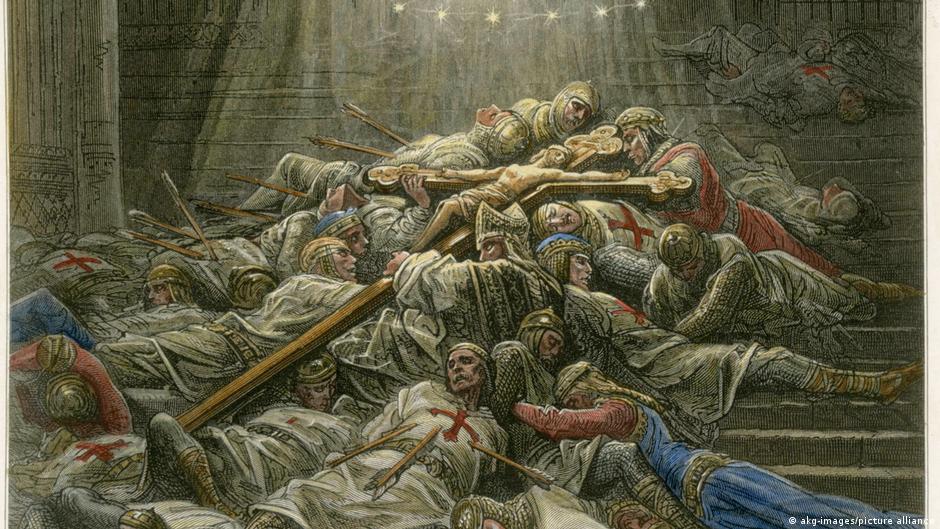
Nearly 1,000 years after Pope Urban II called for a Christian campaign in the Middle East, the Crusades remain a powerful and divisive reference in modern politics, according to DW. The medieval wars are frequently invoked to frame contemporary conflicts, shape group identities and mobilize political support.
DW reports that US Secretary of War Pete Hegseth has repeatedly used biblical language and Crusade symbolism in discussing both domestic and foreign policy. His 2020 book, “American Crusade: Our Fight to Stay Free,” compared the present day with the 11th century and argued that Christians might have to fight despite not wanting war.
The original Crusade movement emerged amid conflict between the papacy and the Holy Roman Emperor, as well as an appeal for military assistance from Byzantine Emperor Alexios I Komnenos. According to DW, Urban II used the request as an opportunity to rally Western Europe around a common enemy and strengthen papal authority. He presented the campaign as a way to “liberate the Church of God,” promising forgiveness for past sins and eternal salvation.
The call attracted people from across medieval society. Historian Jonathan Phillips told DW that participants faced journeys of thousands of miles and a high risk of death, making religious motivation central to recruitment. The People’s Crusade, involving peasants, knights and nobles, was followed by a better-organized force of European nobles. The movement also produced massacres, including attacks on Jewish communities in the Rhineland.
Crusader armies captured cities including Edessa and Antioch before taking Jerusalem in 1099, when thousands of Muslims and Jews were killed, DW reports. The fall of Acre to Mamluk forces in 1291 is widely regarded by historians as the end of the Crusades in the Holy Land, although later campaigns were also described as crusades and Christian military campaigns continued elsewhere.
The legacy has since been adapted by opposing political movements. George W. Bush’s 2001 description of the “War on Terror” as a “crusade” drew protests, while Osama bin Laden used the term to portray US-led wars as attacks on Islam. DW says far-right movements have also adopted expressions such as “deus vult,” or “God wills it,” presenting the medieval wars as symbols of a broader civilizational conflict.