Jaishankar says US-China rivalry is driving a more flexible global order
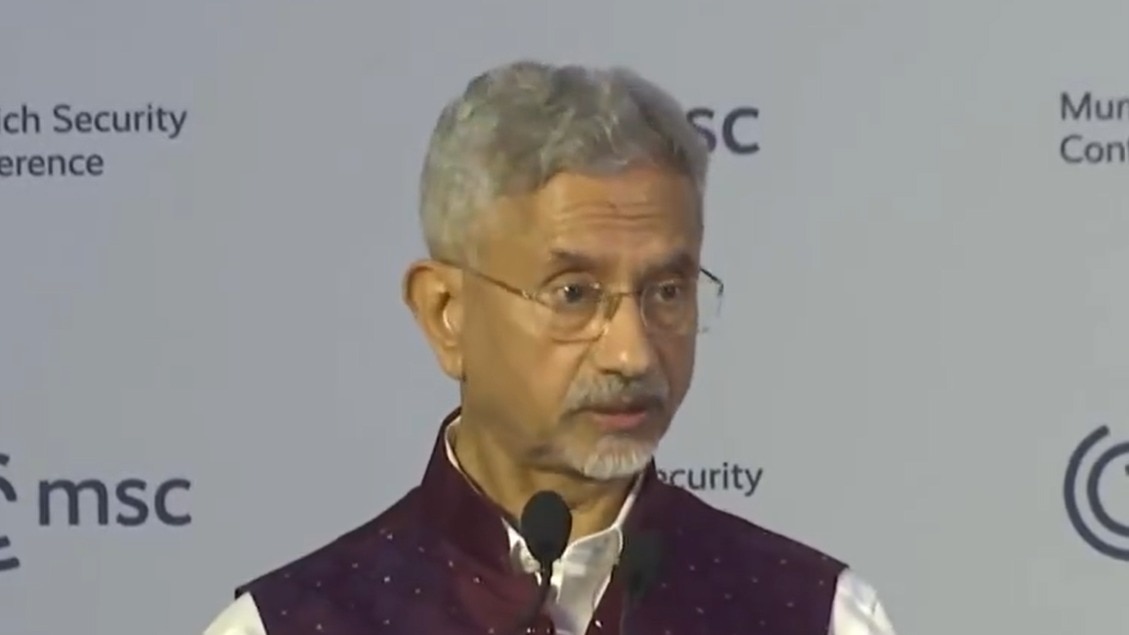
India’s External Affairs Minister S. Jaishankar said a major shift in US policy, China’s rise and intensifying competition between the two powers were reshaping international relations. He argued that emerging and middle powers were pursuing self-reliance, diversified partnerships and cooperation based on practical areas of agreement rather than complete alignment.
India’s External Affairs Minister S. Jaishankar said the international landscape was being reshaped by a major repositioning of the United States, China’s rise and increasingly sharp competition between the two powers. Speaking at the 62nd Munich Security Conference, Jaishankar described the United States as having deliberately become a “lonelier power”.
He said the change was a choice and represented one of the principal features of the current global order. He identified China’s economic strength as another defining factor, saying its capabilities were translating into political influence. According to Jaishankar, competition between Washington and Beijing now extended beyond the two countries and had contributed to the weaponisation of leverage.
At the same time, he said the rivalry existed alongside complex interdependence. Emerging and middle powers were becoming more aware of their interests and seeking greater self-reliance, he said. Jaishankar argued that these countries were diversifying and reducing risks across economic and security relationships.
They were also building resilient supply chains and developing cooperation around specific agendas. He said complete agreement between countries was no longer necessary for collaboration. A reasonable degree of convergence and enough shared interests could provide a basis for working together, he said.
The minister cited the Quad, BRICS, the India-Middle East-Europe Economic Corridor, the International North-South Transport Corridor, the Northern Sea Route, the International Solar Alliance and the Coalition for Disaster Resilient Infrastructure as examples of arrangements based on shared interests. He said such flexible cooperation was contributing to an evolving global architecture.
This independently written report is based on information supplied by the named publisher. Vertrix News has not independently verified the source report.