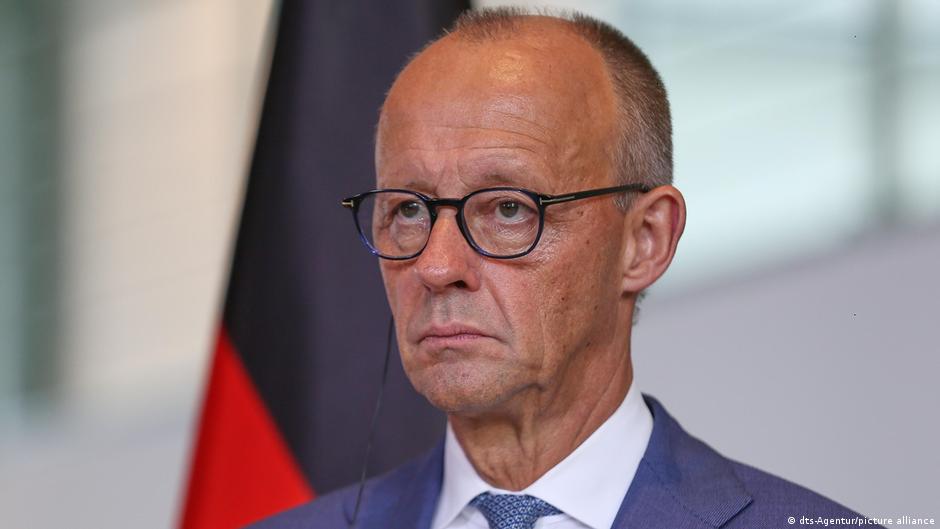
German Chancellor Friedrich Merz is under increasing political pressure less than a year and a half after taking office. According to DW, public support for the federal government has reached a record low, while the Christian Democratic Union (CDU) suffered a major defeat in the Saxony-Anhalt state election.
The situation could worsen in Mecklenburg-Western Pomerania, where the CDU is polling at 7% ahead of the September 20 election, DW reports. That result would put the party close to the 5% threshold for entering the state parliament and could produce its worst-ever result in a state election. The Alternative for Germany (AfD), classified as “confirmed right-wing extremist” by the state’s domestic intelligence agency, won the Saxony-Anhalt election.
The setbacks have prompted questions about whether Merz’s leadership and communication style are contributing to the CDU’s problems. DW cites criticism of his handling of difficult reforms, including planned changes to the state pension system, and of remarks about support for a four-day workweek and work-life balance. Trade union representatives objected to what they viewed as an accusation that Germans were “lazy.”
Education Minister Karin Prien, a fellow CDU member, told public broadcaster ARD that many people believed Merz and the CDU/CSU lacked empathy. SPD Parliamentary Secretary Dirk Wiese separately told Welt TV that tensions appeared to be rising within the CDU and urged the coalition partner to improve its performance.
A change of chancellor would be procedurally possible if Merz resigned and a successor won a Bundestag majority. If he refused to step down, a constructive vote of no confidence would be required. DW names Bavarian Premier Markus Söder and North Rhine-Westphalia Premier Hendrik Wüst as possible successors, but says neither has emerged as a clear choice: Söder lacks broad support within the CDU, while Wüst plans to seek reelection in his state.
All eight CDU state premiers issued a joint statement reaffirming their support for Merz and calling for unity, stability, listening and political action rather than personnel debates. DW also reports that Merz may convene the CDU’s executive committee after the Mecklenburg-Western Pomerania vote to ask whether he retains the party’s confidence.