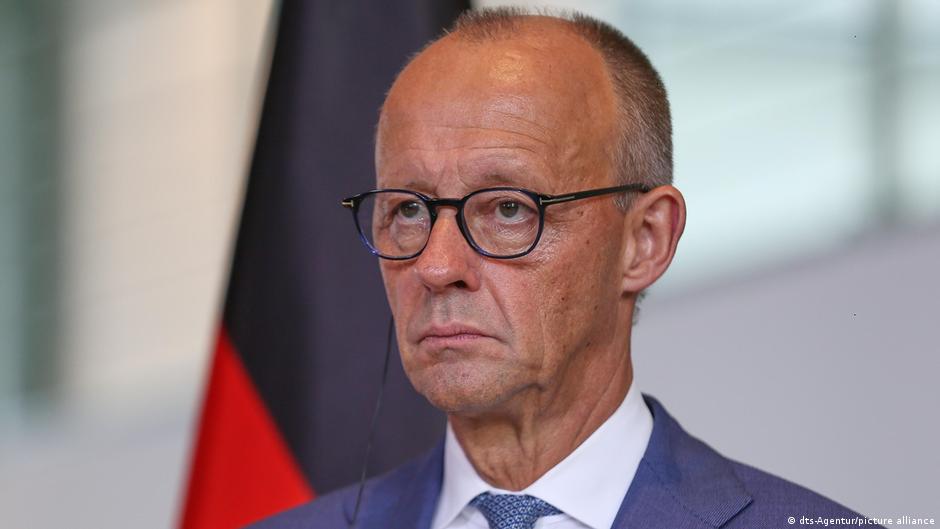
German Chancellor Friedrich Merz is facing renewed questions about his leadership after the Christian Democratic Union suffered a major defeat in Saxony-Anhalt. The setback has intensified concerns about the government’s record-low public support and the CDU’s ability to compete with the Alternative for Germany, or AfD.
According to DW, the CDU is polling at 7% ahead of the September 20 state election in Mecklenburg-Western Pomerania. The party could even fall below the 5% threshold required to enter the state parliament, potentially producing its worst-ever result in the state. The AfD won the recent Saxony-Anhalt election; Germany’s domestic intelligence agency has classified the party as confirmed right-wing extremist in that state.
Merz has acknowledged the heated domestic debate but argued during a visit to Finland that European issues were more urgent. He said he was trying to persuade his party and parliamentary caucus that those matters were more important than Germany’s internal political disputes. His comments came as political circles questioned whether he remained the right person to lead the government, less than a year and a half after taking office in May 2025.
Critics have pointed to Merz’s communication style and his handling of difficult reforms, including a planned pension overhaul. Education Minister Karin Prien told public broadcaster ARD that many people felt Merz and the CDU/CSU lacked empathy. Trade unions also reacted angrily after Merz criticized attitudes toward a four-day workweek and work-life balance, saying they could threaten prosperity; the criticism was interpreted as accusing Germans of being lazy.
The CDU’s coalition partner, the Social Democratic Party, has also voiced concern. SPD Parliamentary Secretary Dirk Wiese said on Welt TV that nerves appeared frayed in the CDU and urged the party to resume constructive cooperation. Still, the CDU and its Bavarian sister party, the CSU, have no clear replacement. Bavaria’s premier Markus Söder is a possible contender but lacks broad party support, while North Rhine-Westphalia premier Hendrik Wüst has shown little inclination to move to Berlin and plans to seek reelection in April.
All eight CDU state premiers said Wednesday that they continued to back Merz, calling for unity and arguing that voters’ trust should be rebuilt through listening and political action rather than personnel disputes. DW reported that Merz may convene the CDU executive committee after the Mecklenburg-Western Pomerania result to seek renewed backing, while his decision to cancel a planned trip to the United Nations General Assembly underscored the seriousness of the political pressure.