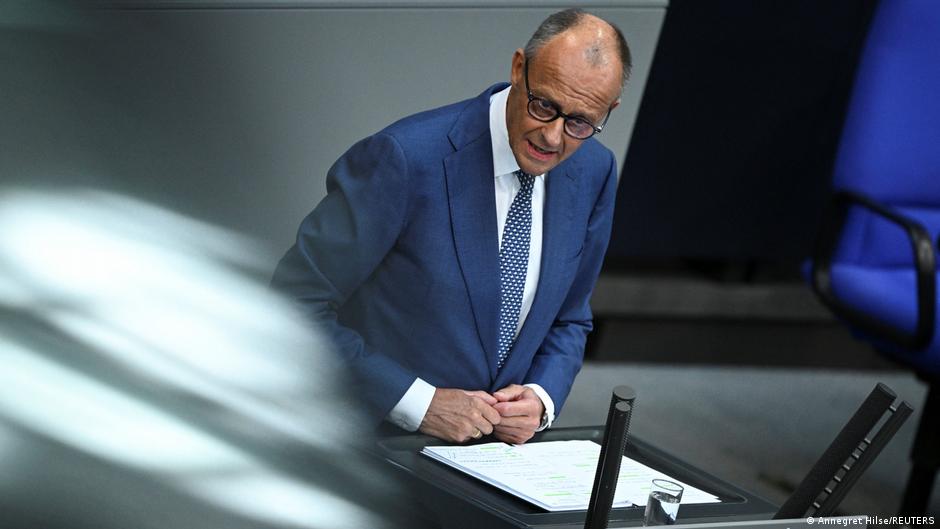
Chancellor Friedrich Merz is facing growing pressure after his approval rating fell to a record low and his Christian Democratic Union suffered a major setback in Saxony-Anhalt’s parliamentary election. According to Deutschlandtrend, a representative survey conducted by Infratest-Dimap for ARD in early September, just 13% of respondents said Merz was doing a good job.
The election result, which saw the CDU’s share halved compared with 2021, has fueled criticism within the party and focused attention on Merz’s communication style. The debate has raised questions about whether he retains the support of the CDU, its Bavarian sister party, the Christian Social Union, and coalition partner the Social Democratic Party.
Germany’s Basic Law gives the chancellor a strong institutional position. Merz could resign voluntarily, as Willy Brandt did in 1974, without necessarily ending the governing coalition. In that case, the Bundestag would elect a successor with an absolute majority of all lawmakers. Brandt was replaced by fellow Social Democrat Helmut Schmidt only 10 days after resigning, according to the source.
A second possibility is a constructive vote of no confidence. Parliament would have to elect a replacement at the same time as removing the incumbent. The mechanism was used in 1982, when Helmut Kohl replaced Schmidt after the Free Democrats withdrew from Schmidt’s coalition and joined the CDU and CSU. The source says such a move against Merz is highly unlikely because the CDU/CSU and SPD do not want to end their coalition, while no clear successor has emerged.
A third route involves a confidence vote initiated by the chancellor. If the government loses, the chancellor may ask the German president to dissolve the Bundestag and call new elections, although the president is not required to agree. Merz has said he sees no point in seeking such a vote, and neither coalition bloc is described as interested in elections while its approval ratings are low.
For now, the source concludes, Merz appears likely to remain in office. It also notes that political developments in Berlin have been changing rapidly, leaving open the possibility of a different outcome.