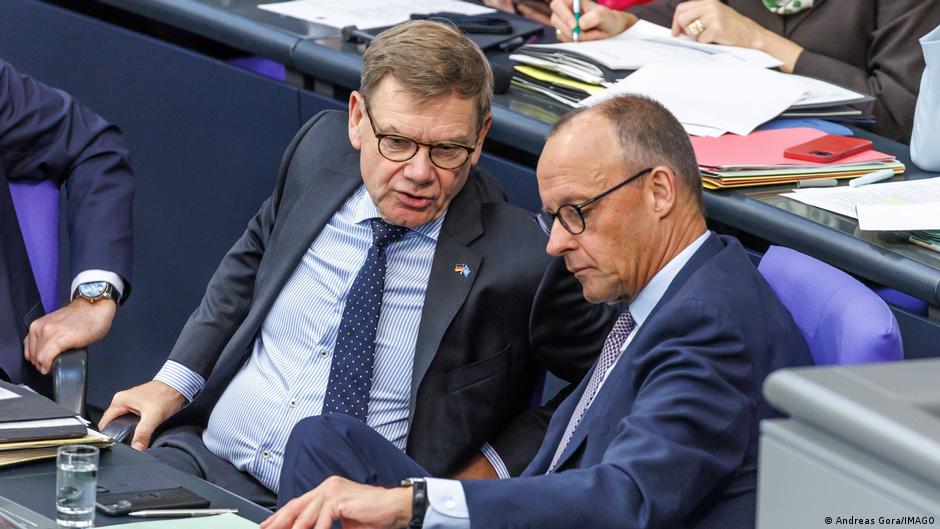
Chancellor Friedrich Merz has appealed for discipline within his Christian Democratic Union as criticism of his leadership intensifies after the party’s poor performance in the Saxony-Anhalt election. Speaking at an international Arctic policy meeting in Rovaniemi, Finland, Merz said domestic disputes should not distract from Germany’s role in shaping European security policy.
Merz said he was trying to persuade his colleagues, party and parliamentary group that the country’s wider responsibilities were more important than current internal debates. His comments came as some CDU members openly discussed whether he should be replaced, according to DW.
Senior figures in the coalition’s center-left Social Democratic Party expressed concern about the turmoil. SPD parliamentary manager Dirk Wiese said the CDU appeared to be losing focus and urged it to move ahead with reforms agreed by the government. When asked whether those reforms had to be implemented under Merz, Wiese said the chancellor needed to adopt a different tone rather than directly committing to his continued leadership.
SPD parliamentary deputy leader Siemtje Möller was more direct, saying the party’s participation in the governing coalition was not tied to Merz personally. The comments leave open questions about the coalition’s political future while stopping short of announcing any change in its composition.
Several CDU politicians defended the chancellor. Matthias Middelberg, the party’s budget policy spokesman, said he still believed in Merz and described the leadership debate as unnecessary. Foreign Minister Johann Wadephul said Merz could rely on the support of the governing parliamentary groups and Cabinet, calling the government stable.
Green Party co-leader Felix Banaszak also criticized the speculation, although he has not supported Merz politically. He said the chancellor and coalition had been elected and had a responsibility to govern, warning that discussions about minority governments, ministerial dismissals and an early change of chancellor suggested that the CDU was losing control of both the coalition and its internal debate.