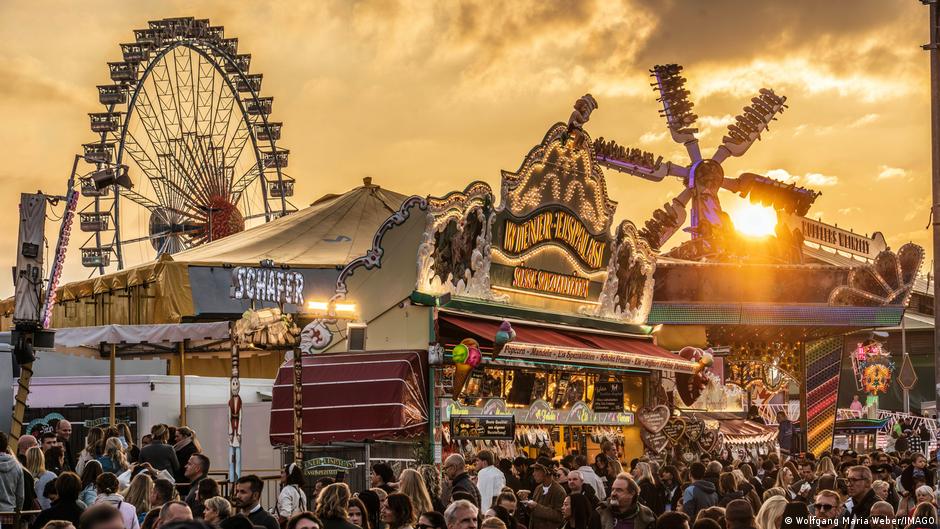
Oktoberfest will begin at noon on Saturday, September 19, when Munich’s mayor is scheduled to tap the first beer barrel and declare “O’zapft is.” According to DW, 12 gunshots will then signal to the festival’s tents that beer service can begin. The event is scheduled to continue through October 4, with more than 6 million visitors expected.
The festival occupies Munich’s 34.5-hectare Theresienwiese, an area described by DW as roughly the size of 48 soccer fields. Crowds can become particularly heavy on weekends. Last year, officials temporarily closed entrances after dense crowds brought movement to a standstill on one Saturday afternoon and caused some visitors to panic.
Munich has revised its security arrangements in response. Twenty-six new cameras will supplement 56 police cameras, while an artificial intelligence system will assess visitor movements and issue alerts when parts of the grounds become overcrowded. A new coordination center is intended to improve communication among security agencies and organizers. Police and organizers have also prepared a plan to counter drones, although DW said details were not disclosed. Six hundred police officers are due to be deployed at the festival.
The festival’s visitors remain predominantly regional, according to a city-commissioned study cited by DW. In 2025, 41% came from Munich, 25% from the surrounding area and 9% from elsewhere in the region. Overall, three-quarters of about 6.5 million visitors came from Bavaria, while international visitors accounted for about 21%. Americans were the largest international group, followed by Italians.
A one-liter mug of beer is priced between €14.80 and €15.90 this year, while a liter of table water costs €11. Free drinking fountains are available on the grounds. Cannabis is prohibited throughout the site, and amusement-ride tickets range from just under €5 to €14.
DW also reports that many vendors still accept only cash, despite the festival’s international profile. Traditional clothing such as dirndls and lederhosen is common but not required, and the event continues to emphasize its historic fairground traditions. Nearly 90% of the festival’s more than 130 fairground operators reportedly trace their roots to the 19th century.