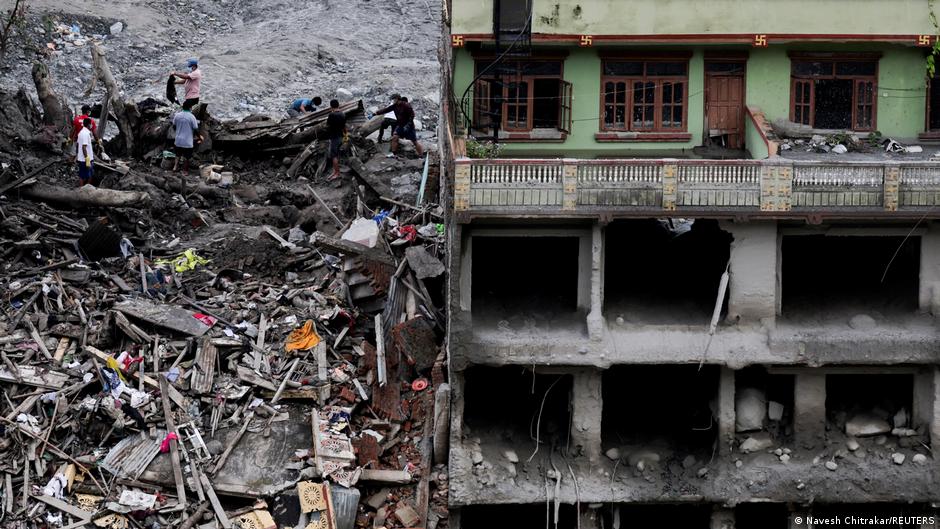
Nearly three weeks after flash floods struck Nepal’s Bhotekoshi-Trishuli river corridor near the Chinese border, authorities are shifting from search-and-rescue operations toward relief and reconstruction. The floods devastated communities across five districts and destroyed roads, bridges and hydropower facilities.
Authorities say 1,386 bodies have been recovered, while more than 5,130 people remain missing. The missing include 587 foreign nationals and about 900 workers employed in hydropower tunnels and other energy facilities, according to DW. Search teams are still working in submerged tunnels and along muddy riverbanks as families await news of relatives.
In the upper river basins, some settlements were destroyed within minutes. Damaged transport links have isolated communities, leaving rescue and relief teams dependent on helicopters to deliver supplies. In Uttargaya Rural Municipality, at least 618 houses were swept away or buried and 877 people remain missing; only 12 bodies have been recovered.
Chameli Gurung, Uttargaya’s deputy chair, told DW that public land had either been washed away or become unsafe for burials. She said relatives were travelling to Kathmandu to perform final rites, while local officials considered leasing private land for displaced families before winter. Communication Minister Bikram Timilsina said the government was arranging resettlement near people’s original homes and offering financial assistance based on household size.
A preliminary rapid damage and needs assessment cited by local media puts reconstruction requirements at 723.3 billion Nepalese rupees, or about $4.78 billion. Nearly two-thirds of that amount is expected to fund repairs to energy, transport and academic facilities. Nepal’s electricity supply and export revenue are heavily dependent on hydropower, much of which was damaged in the floods.
Timilsina told DW that Nepal would use domestic resources while seeking international assistance. The government has approached the UN-backed Loss and Damage Fund, although the fund has not begun distributing its limited resources. Nepal also wants reconstruction to focus on climate-resilient infrastructure. DW reported that scientists caution against attributing the individual disaster solely to global warming, while noting that rising temperatures are accelerating glacial melt across the Himalayas.