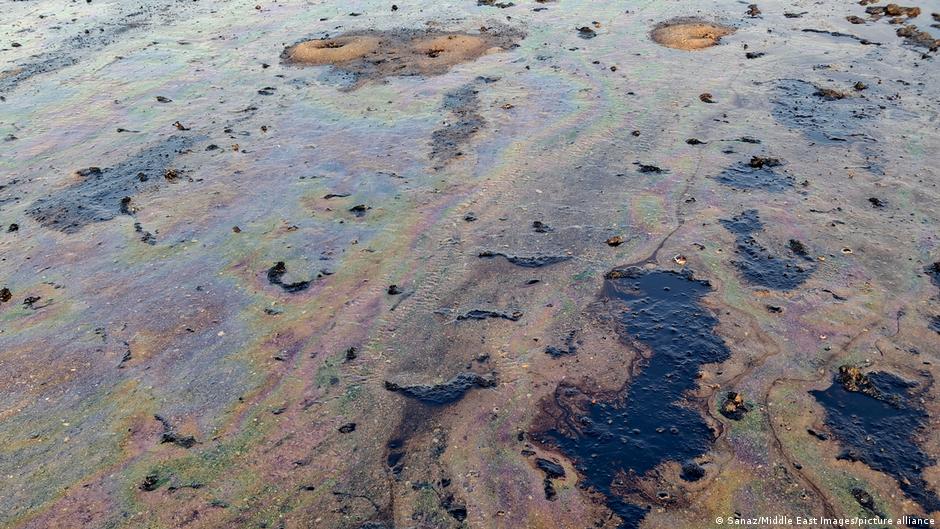
Satellite imagery is revealing an oil pollution crisis in the Strait of Hormuz as tankers are struck, stranded or sunk amid the US-Iran war, according to Greenpeace and environmental researchers cited by DW. The images show visual signs associated with leaking oil, including darkened water, silvery trails and reflective sheens.
A Russian tanker carrying about 800,000 barrels of oil stranded off Oman in June, causing what the source describes as a major spill. Greenpeace said as many as 85 large oil tankers were previously stuck in the strait, although that number has since fallen to 13. The organization has used satellite imagery to identify more than 100 spills since the war began, while warning that GPS spoofing may have concealed others.
Greenpeace identified five major slicks with a combined visible area of 240 square kilometers earlier this week. More recent imagery put the visible area at about 80 square kilometers, apparently because weather conditions dispersed the slicks. Nina Noelle, a Greenpeace expert on environmental disaster relief, told DW that the smaller surface area did not necessarily mean less ecological damage, because oil can sink into sediment and affect ecosystems for years.
The slicks include one near Oman’s Musandam National Park, which contains coral reefs, marine life and seabird breeding grounds. Another was identified near Iran’s Minab River Delta, close to protected mudflats and mangrove forests. Noelle said oil can coat mangrove roots, obstructing gas exchange and potentially killing the trees, while seabirds can lose buoyancy and suffer damage to their eggs.
The pollution also poses risks to coastal communities and water supplies. Fish exposed to oil can die, and contamination could affect seawater used for desalination, which provides most drinking water in Kuwait and large shares in Oman and Saudi Arabia. Wim Zwijnenburg of the Dutch peace organization Pax told DW that military activity, mines and restricted information make rapid cleanup difficult. Satellite monitoring is continuing, although access to some higher-resolution commercial imagery has been limited during the war.