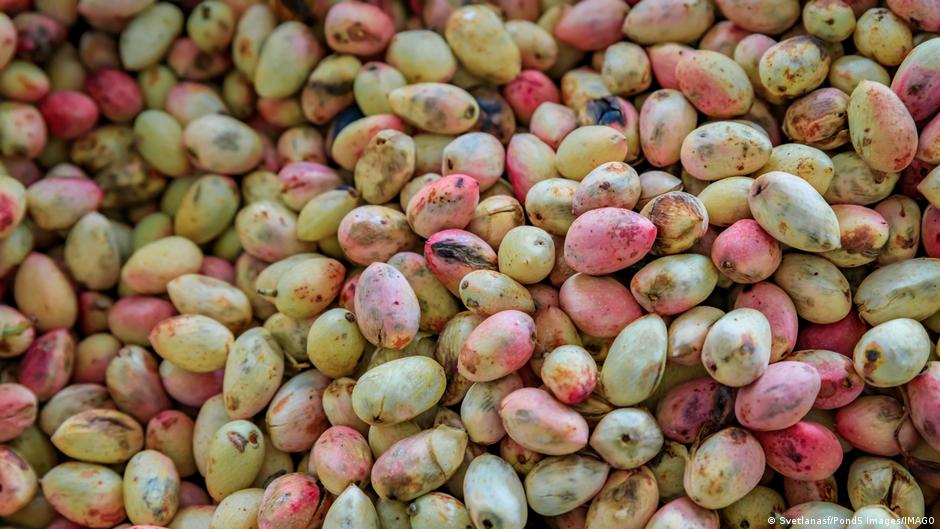
Pistachio farmers in southeastern Iran and California are confronting a shared threat: farmland sinking as groundwater reserves decline. In Rafsanjan, Iran’s main pistachio-growing region, cracks have damaged irrigation pipes and allowed water to escape, while parts of California’s Central Valley are also experiencing significant subsidence.
DW reports that some areas of Rafsanjan are sinking by up to 37 centimetres a year. The region has endured drought and extensive groundwater extraction for irrigation, and farmers now drill far deeper for water than in previous generations. Some orchards have been abandoned after wells dried up, while others are producing under increasingly difficult conditions.
The agricultural connection between the two regions dates to the 1960s, when US farmers built a pistachio industry around an Iranian variety known as Kerman, named after a city near Rafsanjan. California has since become the world’s largest producer, with most of its crop grown in the Central Valley. DW says some parts of the valley are sinking by as much as 20 centimetres annually because pumping exceeds the rate at which aquifers are replenished.
California’s Sustainable Groundwater Management Act, passed in 2014, requires agencies to balance groundwater pumping and recharge by 2040. One approach is managed aquifer recharge, which stores water underground during wet years, including by flooding farmland. Joe Coelho, a California pistachio farmer and sustainability director at American Pistachio Growers, is participating in a pilot project using this method.
There has been some improvement: California’s Department of Water Resources says groundwater levels have risen in four of 10 monitored wells. But Helen Dahlke of the University of California, Davis, told DW that recharge alone is unlikely to reverse decades of overuse. She said lasting balance would probably require matching crop water demand with the amount available under a warmer and more variable climate.
Iranian researcher Ali Beitollahi told DW that subsidence in Iran is caused by human activity and that much of the damage cannot be reversed once aquifers collapse. He said draft regulations are awaiting approval and called for immediate changes in irrigation. Most Rafsanjan orchards are still flood-irrigated, a method that loses substantial water before it reaches plant roots.