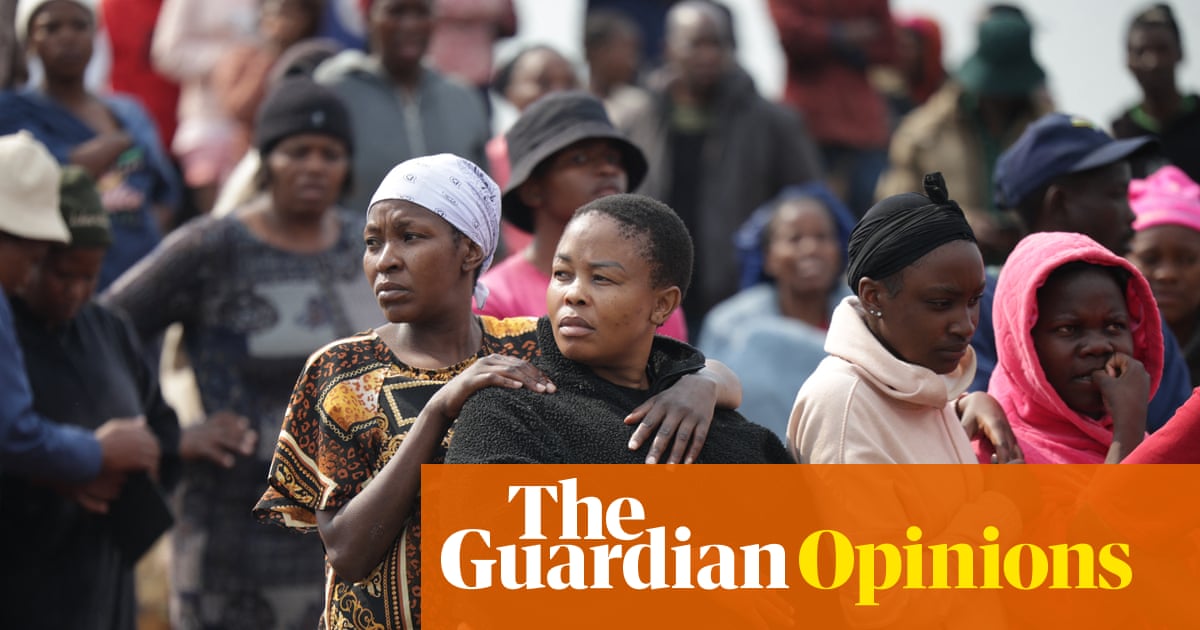
An opinion article in The Guardian has criticised official advice urging women in and around Kempton Park, east of Johannesburg, to avoid isolated places and remain vigilant following the deaths of nine women since July. Author Nolethu Ndude argues that women already take extensive precautions and that such guidance shifts responsibility for preventing violence onto potential victims.
Police are investigating the deaths of women whose bodies were found across the Ekurhuleni district, according to the article. Some victims were found naked or partially clothed, and several had visible injuries. The article identifies one victim as Elizabeth “Tsontso” Moselakgomo, 38, who disappeared after leaving her Kempton Park home for a run on 9 September; her body was found three days later.
Ndude says women use informal safety systems, including sharing travel details, checking routes and contacting friends after reaching their destinations. She argues that these measures cannot by themselves prevent gender-based violence, and questions why public warnings do not place comparable emphasis on perpetrators, policing, prosecution and prevention.
The article cites UN Office on Drugs and Crime data putting South Africa’s female homicide rate at 12.2 per 100,000 in 2022, nearly six times the global rate. It also refers to President Cyril Ramaphosa’s declaration of gender-based violence and femicide as a national crisis after protests ahead of the G20 summit in Johannesburg in November 2025.
Ndude asks what practical changes follow such declarations, including whether police have sufficient resources and training, whether protection orders are enforced, and whether shelters and courts are adequately supported. The Commission for Gender Equality has called for an urgent safety audit covering lighting, surveillance, public transport, neglected spaces, police visibility and emergency assistance.
The writer argues that prevention should extend nationally and begin before violence reaches the criminal justice system. She calls for sustained education on consent, bodily autonomy, healthy relationships and positive masculinity, and urges men to challenge misogyny, controlling behaviour and entitlement in their own communities. Ndude concludes that immediate safety warnings may be useful but should not become a substitute for state accountability and action against violence.