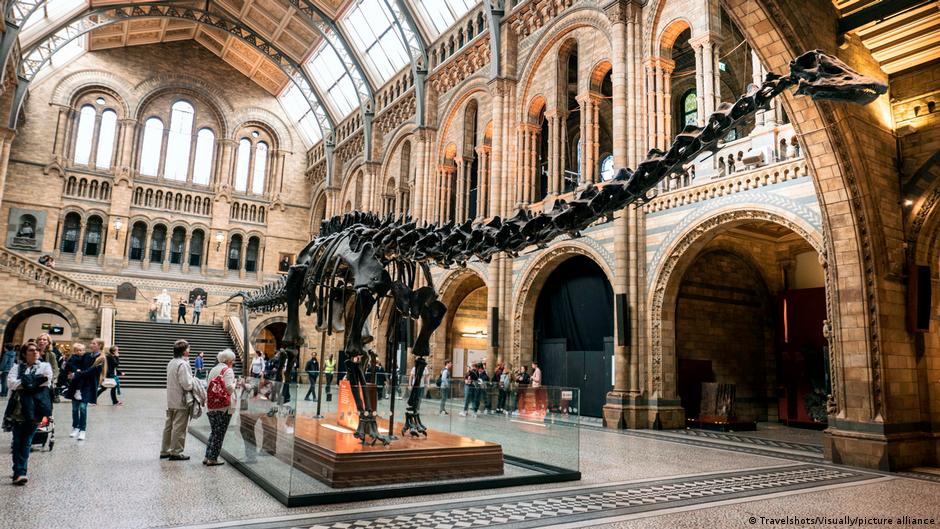
Researchers from Spain’s Dinopolis Foundation say fossils found at the La Tejeria site in eastern Spain provide the first skeletal evidence of the Diplodocus genus outside North America. Their findings were published in the Journal of Vertebrate Paleontology, according to DW.
The material includes 14 caudal, or tail, vertebrae and several chevron bones dating to about 150 million years ago. The researchers studied the fossils at the La Tejeria site in the municipality of El Castellar, in Teruel, an area known for remains of giant sauropods.
The paper concluded that the fossils could be confidently assigned to Diplodocus, a group of long-necked, plant-eating sauropod dinosaurs. The authors described the discovery as one of the most complete diplodocid skeletons from Europe, where fossils from this group have generally been scarce and fragmentary.
Diplodocus is widely recognized for its long neck and large tail. Before the Spanish discovery, fossilized remains attributed to the genus had been recovered only in North America, particularly from the Morrison Formation, the researchers said.
The team said the find adds evidence to the idea that dinosaurs moved between North America and Europe during the Late Jurassic, when the continents were beginning to separate. In the paper, the authors described the fossils as strong evidence of episodic dispersal and exchanges of animal populations across the proto-North Atlantic around the late Kimmeridgian to early Tithonian stages, approximately 150 million years ago.
Scientists have proposed that temporary land bridges, periods of reduced sea levels or other connections may at times have allowed land animals to cross between the separating continents. DW reported that discoveries in Spain and Portugal have helped reinforce that possibility. The researchers also cited proposed routes connecting North America with Scandinavia, and another linking what are now Brazil and Cameroon.