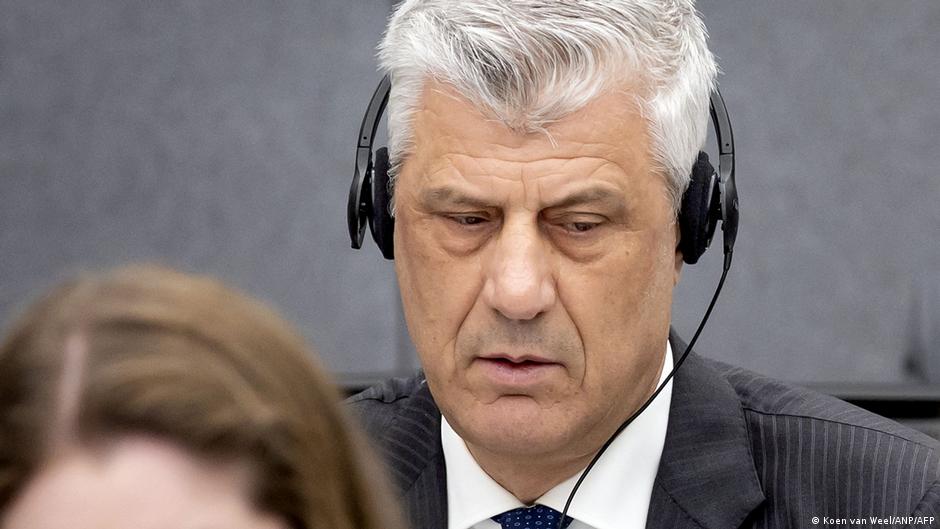
The Kosovo Specialist Chambers in The Hague convicted former Kosovo President Hashim Thaci and former KLA leaders Kadri Veseli, Rexhep Selimi and Jakup Krasniqi of war crimes committed during the 1998–99 Kosovo war. The court sentenced them at first instance to a combined 81 years in prison: 25 years each for Thaci and Krasniqi, 18 years for Veseli and 13 years for Selimi.
The defendants were found responsible for the arbitrary detention of 385 people, cruel treatment of 49, torture of 303 and the murder of 96, according to the supplied source. The court acquitted them of crimes against humanity, saying prosecutors had not proved that the acts formed part of a widespread or systematic attack against a civilian population.
Speaking at a Wednesday evening press conference, Serbian President Aleksandar Vucic criticized the acquittal on the crimes-against-humanity charges. He said the court, which is part of Kosovo’s judicial system but operates in The Hague with international judges, had not addressed what he described as the broader purpose behind the KLA’s formation or crimes committed against Serbs after June 20, 1999, when the NATO-led KFOR peacekeeping mission arrived in Kosovo.
Vucic also condemned reactions from Kosovo and Croatia. He rejected Kosovo Prime Minister Albin Kurti’s description of the ruling as an “unacceptable injustice” and objected to a Croatian ministry statement emphasizing crimes committed by the regime of former Serbian leader Slobodan Milosevic. Vucic said Serbs were consistently portrayed as perpetrators rather than victims.
Serbian lawyer Aleksandar Olenik welcomed the convictions, saying they established individual responsibility for crimes in areas controlled by the KLA. He told DW that the proceedings represented progress because victims had legal representation and could seek compensation. Olenik said Kosovo’s domestic courts should pursue other suspected perpetrators, including cases covering the period after the armed conflict ended.
Stasa Zajovic of the Belgrade-based Women in Black organization said Serbian and Kosovo authorities used war-crimes judgments to intensify political conflict rather than examine their own responsibilities. She said the scale of crimes by the two sides should not be equated, while warning that international forces should monitor tensions. Olenik said earlier international judgments had done little to improve Serbia-Kosovo relations and was not optimistic about a near-term positive effect.