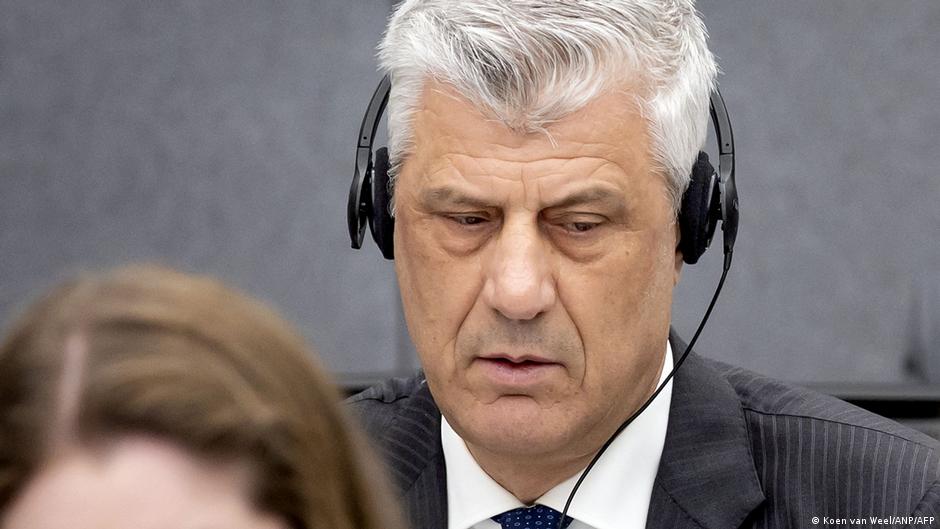
The Kosovo Specialist Chambers in The Hague convicted four former Kosovo Liberation Army leaders over crimes committed during the 1998–99 Kosovo war. Former Kosovo President Hashim Thaci and former KLA leaders Kadri Veseli, Rexhep Selimi and Jakup Krasniqi received combined first-instance sentences of 81 years.
The court sentenced Thaci and Krasniqi to 25 years each, Veseli to 18 years and Selimi to 13 years. It found the defendants responsible for the arbitrary detention of 385 people, cruel treatment of 49, torture of 303 and the murder of 96. The four were acquitted of crimes against humanity because prosecutors had not proved a widespread or systematic attack against civilians.
Speaking at a press conference, Serbian President Aleksandar Vucic criticized the court’s decision not to convict the men of crimes against humanity. He also said the verdict did not address crimes committed against Serbs after June 20, 1999, when the NATO-led KFOR peacekeeping mission arrived in Kosovo following the formal end of the conflict.
Vucic said the tribunal had avoided undermining the KLA’s credibility and criticized reactions from Kosovo and neighboring countries. He rejected Kosovo Prime Minister Albin Kurti’s description of the verdict as an “unacceptable injustice” and said regional statements too often portrayed Serbs as perpetrators rather than victims.
Serbian lawyer Aleksandar Olenik gave a more favorable assessment, saying the ruling established individual criminal responsibility for crimes in areas under KLA control. He told DW that the court’s treatment of victims, including legal representation and potential compensation, represented progress in international criminal law.
Stasa Zajovic of the Belgrade-based Women in Black said Serbian and Kosovo authorities used war-crimes judgments to intensify political conflict rather than examine their own responsibility. She said the scale of crimes committed by the Serbian regime, particularly in Kosovo, must not be forgotten, and argued that international forces should continue monitoring tensions. Olenik said the verdict was unlikely to improve relations quickly, although he hoped it might be viewed more objectively over time.