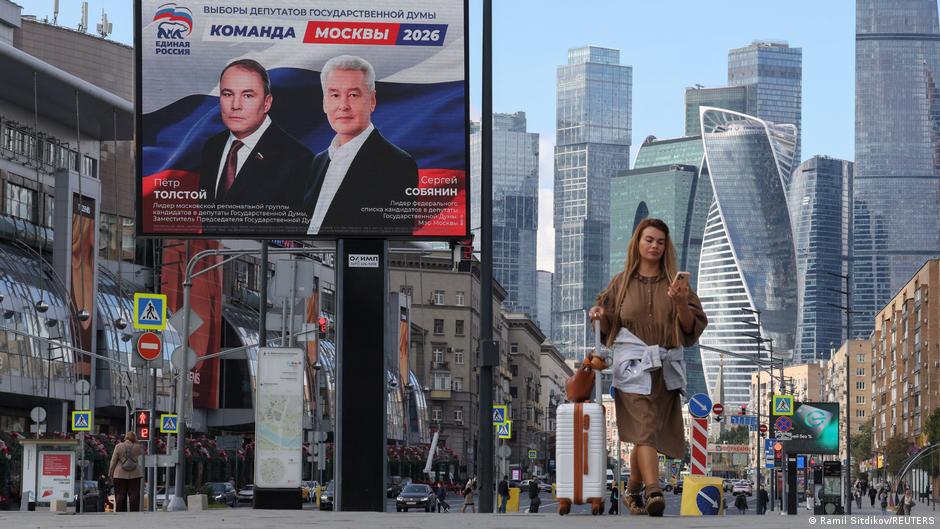
Russia’s parliamentary election is taking place amid growing anxiety about the war in Ukraine and its effects on daily life, DW reports. Nearly half of respondents to a survey by state pollster FOM said alarm was the prevailing mood among people around them, while independent pollster ExtremeScan found that 60% believed the war had brought negative consequences for their lives.
Margarita Zavadskaya, a sociologist and senior research fellow at the Finnish Institute of International Affairs, attributed the anxiety and war fatigue to increasing uncertainty. She told DW that rising prices, internet restrictions, fuel shortages linked to Ukrainian strikes on oil refineries and rumors of another mobilization drive were making it more difficult for people to plan for the future. Some Russians, she said, were leaving the country because they feared being drafted after the election.
The vote for the State Duma, held from September 18 to 20, is the first parliamentary election in Russia since 2022 and the first during the Ukraine war, according to the source. While official results are not expected to bring major surprises, the Kremlin is likely to pay close attention to turnout. Zavadskaya said the government could produce the figures it needed, but would still face a political cost. Opposition politician Ilya Yashin told DW that the election would help show whether the population remained loyal and provide legitimacy for continuing the war.
United Russia, the ruling party de facto led by President Vladimir Putin, is campaigning with victory in the war among its priorities. Its candidate list includes people presented as war veterans. Yet DW cites polling by the Levada Center showing that six in 10 Russians favor peace negotiations with Ukraine. Zavadskaya said Kremlin references to possible talks in October could be intended partly to calm voters.
The liberal opposition party Yabloko, the only registered political force cited as opposing the war, was barred from standing in the election after a court decision. ExtremeScan said 18% of Russians would have supported it. Opposition groups are offering competing ways to register dissent: Yulia Navalnaya and Maxim Katz have urged voters to support any party other than United Russia, while Yabloko has called for spoiled ballots. Yashin has instead urged people to appear at polling stations at noon on September 20 as a visible sign of opposition to the war.