Deep-sea microbes survive laboratory ocean modelled on Saturn’s Enceladus
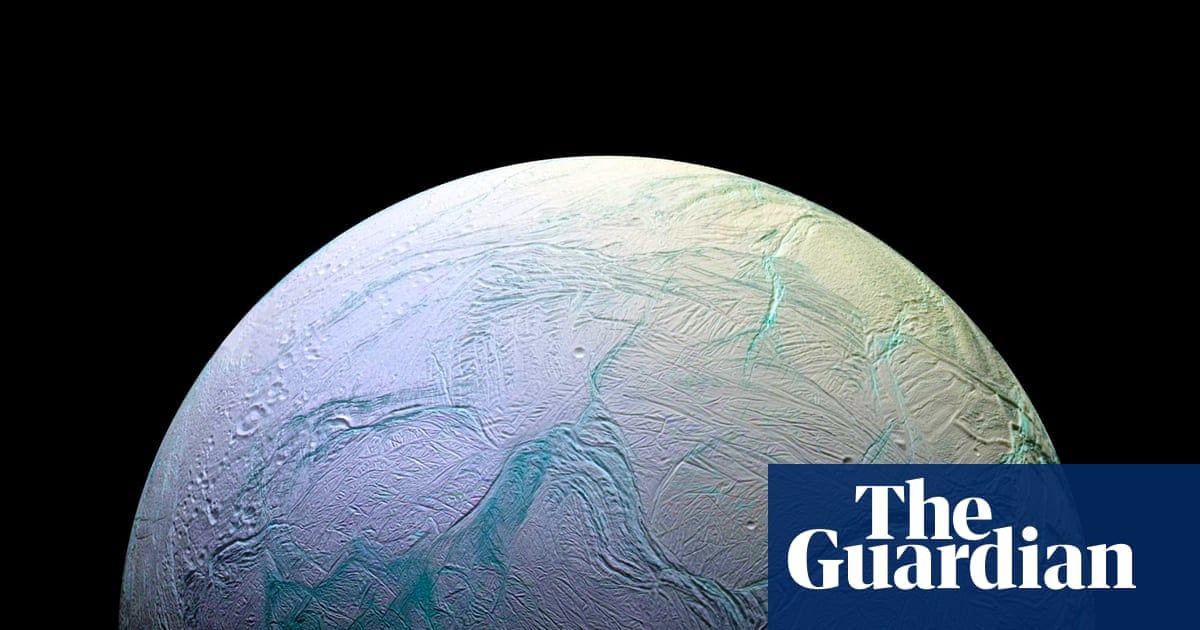
Researchers found that methane-producing microbes from hydrothermal vents survived and grew in a laboratory solution designed to mimic the alkaline ocean beneath Saturn’s icy moon Enceladus. The experiment does not prove life exists there, but scientists say it removes another obstacle to the moon’s potential habitability.
Microbes from deep-sea hydrothermal vents have survived and grown in a laboratory solution designed to replicate conditions in the ocean beneath Saturn’s moon Enceladus. The organisms, collected from waters near Japan, produce methane by converting hydrogen and carbon dioxide. Researchers found that they remained viable in a brine modelled on the moon’s highly alkaline ocean.
Scientists created the solution using water, salts, carbonates and powdered rock. The mixture reproduced reactions between water and a rocky seafloor, generating hydrogen in a process thought to occur in Enceladus’s ocean. The microbes grew even when the solution reached a pH of 11, considerably more alkaline than the organisms’ known limit.
They also adapted their metabolism to low concentrations of carbon dioxide. William Orsi, a geomicrobiology professor at Ludwig-Maximilian University in Munich, said the findings suggested that an organism like the tested microbes could survive if it existed on Enceladus. However, the work does not show that life has evolved there.
Enceladus is about 300 miles wide and has an icy crust covering a saltwater ocean. Observations by NASA’s Cassini spacecraft and the James Webb Space Telescope have identified water and ice plumes, while Cassini samples have contained organic substances. The researchers cautioned that their experiments lasted only days, leaving unanswered whether such organisms could survive for much longer.
A second paper reported that ice grains in the plumes may concentrate ocean material, potentially making biosignatures easier to detect. The European Space Agency is considering a mission combining a Saturn orbiter with an Enceladus lander. A launch has been proposed for about 2042, with arrival expected in the 2050s.
This independently written report is based on information supplied by the named publisher. Vertrix News has not independently verified the source report.