Greenpeace drops boulders in North Sea protected area to block bottom trawling
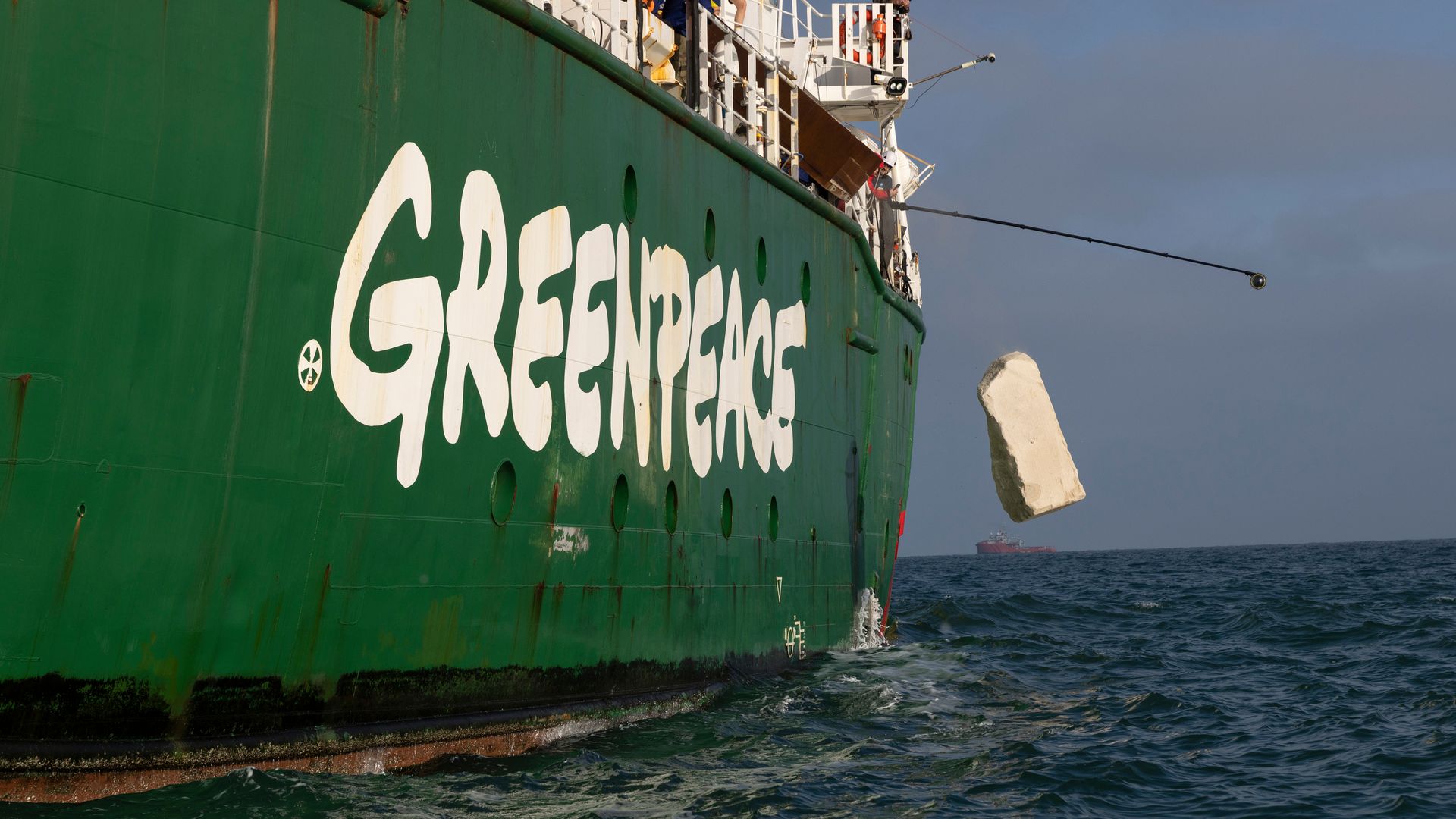
Greenpeace says it has created an underwater boulder barrier covering 116 square kilometres of the Southern North Sea marine protected area. The group says the action is intended to deter bottom trawlers and protect harbour porpoises, while the government has been contacted for comment.
Greenpeace activists have dropped large boulders into the Southern North Sea marine protected area, saying the underwater barrier will prevent industrial bottom trawlers from fishing in part of the zone. The organisation carried out the action from its ship Arctic Sunrise and said it had effectively closed 116 square kilometres to bottom trawling. The Southern North Sea protected area stretches along England’s east coast, from north of Dogger Bank to the Strait of Dover.
It was established in part to protect harbour porpoises and preserve the availability of prey. Greenpeace says the area supports nearly 20% of the UK’s North Sea harbour porpoise population. Despite the area’s protected status, Greenpeace and the Guardian reported that most fishing remains unrestricted there.
The group said bottom trawlers, dredgers and other industrial vessels continue to operate in the zone. Greenpeace’s analysis found that bottom trawlers recorded more than 37,200 hours of fishing in the protected area during 2025. Will McCallum, Greenpeace UK’s co-executive director, said industrial vessels were damaging the seabed and killing wildlife including porpoises, sharks and seabirds.
He said the group was acting because, in its view, the government had failed to protect the sea. The organisation has labelled the area an “ocean park” and said the Arctic Sunrise would patrol it in the coming days to discourage other forms of industrial fishing. The operation followed a warning Greenpeace issued in June that it would take direct action if the government did not act.
The group said bottom trawlers and dredgers had disturbed a cumulative 55,600 square kilometres of marine protected-area seabed in 2025, an area it compared with 58 times the size of Dartmoor National Park. The action coincided with the nationwide premiere of Blue Planet III, the latest BBC wildlife documentary narrated by David Attenborough to focus on the oceans and human impacts on marine environments. Greenpeace presented the deployment as part of a broader campaign for stronger protection of UK waters.
Labour MP Kerry McCarthy, a former climate minister and member of the all-party parliamentary group for the ocean, added her name to one of the boulders. She said less than 1% of UK seas were protected from industrial fishing and called for a ban on bottom trawling and properly protected ocean sanctuaries in UK waters and across the Atlantic. The reports do not include a government response to the operation; the Guardian said officials had been contacted for comment.
Greenpeace’s account establishes the purpose and scale of the action, but the material supplied does not say whether fishing vessels have already encountered the barrier or whether authorities plan to remove the boulders.
Vertrix News compared the attributed reports listed below and wrote this independent synthesis. Claims remain attributed where independent verification was unavailable.
Sources
- Sky News
- The Guardian