Hong Kong hospital centre deploys robots and AI for laundry and meals
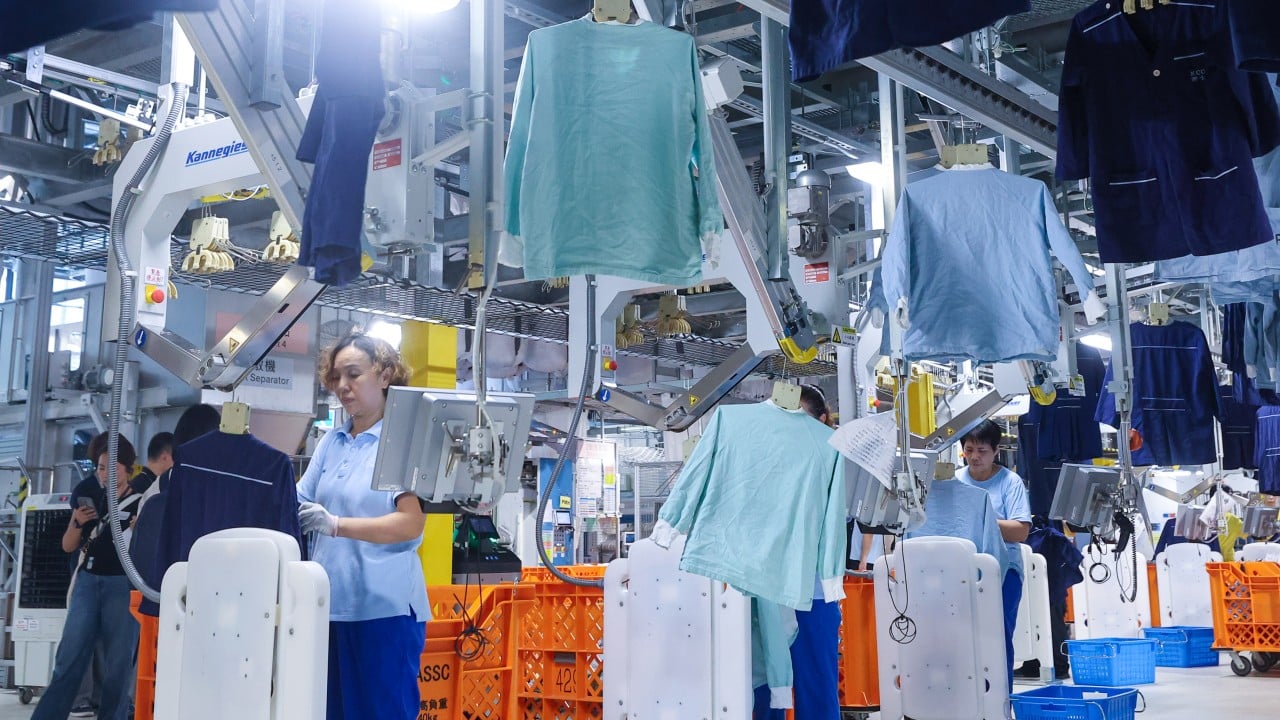
Hong Kong’s Hospital Authority has begun using robotic systems, X-ray sorting and automated food production at a six-storey support centre on Lantau Island. The facility currently serves about half of public hospitals’ laundry and meal needs, with officials expecting its coverage to approach 70 per cent by the end of 2026.
Hong Kong’s Hospital Authority has introduced artificial intelligence and robotic automation at a central support centre serving public hospitals, with the stated aim of improving efficiency and workplace safety. The six-storey, 62,000-square-metre facility in Tung Chung on Lantau Island houses the authority’s central laundry and food production operations. It began operating in March last year and was opened to the press on Tuesday.
The laundry occupies three floors and uses Hong Kong’s first automatic X-ray sorting system to check clothing and linen from 13 public hospitals for foreign objects. Robotic arms collect items from a conveyor belt before they are washed, while automated systems handle folding, ironing, packaging and delivery. A robotic transport and stacking system moves heavy linen bundles to automated storage racks.
Automated guided vehicles then take sorted cages to delivery bays. Dr Law Chun-bon, a cluster chief executive, said automation had reduced repetitive strain, heavy lifting and exposure to the hot, humid conditions of traditional laundry work. The centre’s food unit prepares meals for 15 public hospitals.
Its automated lines use cook-chill technology, cooling food from 75 degrees Celsius to below four degrees within two hours. X-ray equipment is also used to check meals for safety. The centre currently handles 33.2 million kilograms of laundry and 14.7 million meal sets each year, meeting about half of the authority’s overall support-service demand.
Officials expect that share to rise to nearly 70 per cent by the end of 2026. The complex also contains a corporate data centre with 500 server racks and emergency stores holding about one-quarter of the authority’s required personal protective equipment. Officials said the centralisation would free hospital space for clinical and patient services.
This independently written report is based on information supplied by the named publisher. Vertrix News has not independently verified the source report.