Netanyahu invokes Trump backing as Israel votes amid renewed Iran-war warnings
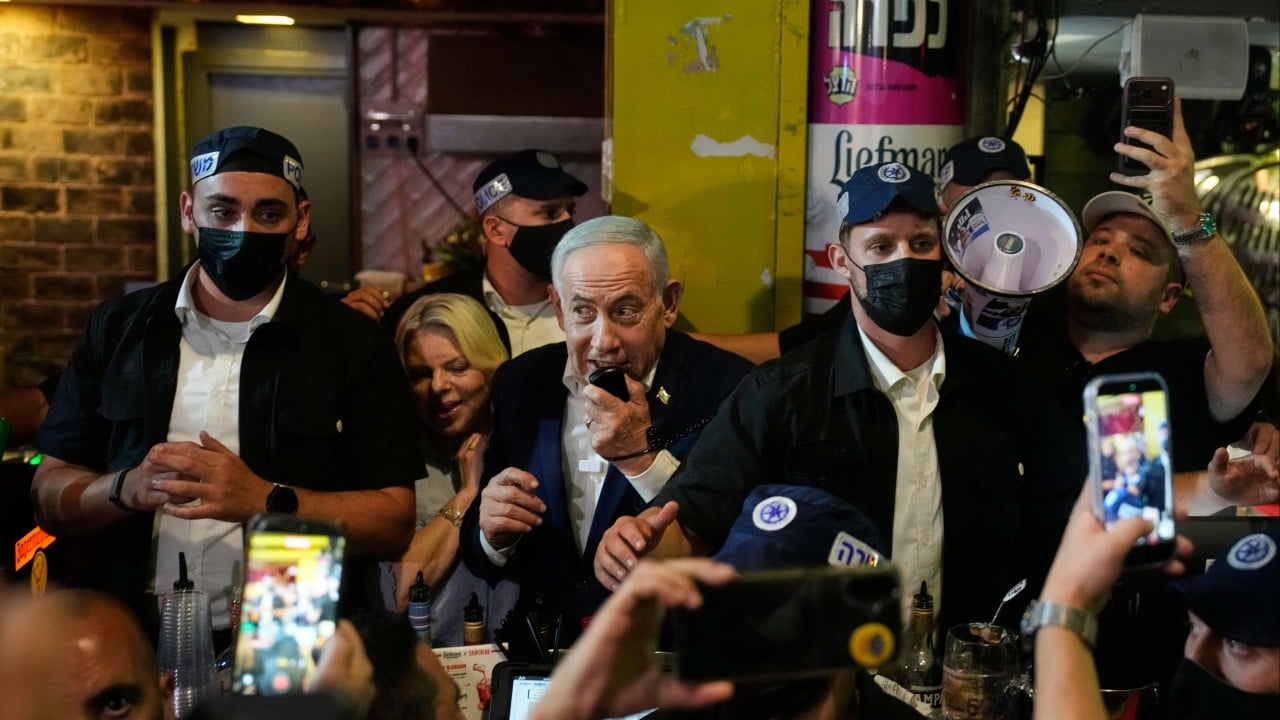
Israeli Prime Minister Benjamin Netanyahu has used Donald Trump’s endorsement to argue that he is best placed to confront Iran, while suggesting further action could follow if he remains in office. The White House says the United States will not attack Iran before its November midterm elections, adding uncertainty to Netanyahu’s warning.
Israeli Prime Minister Benjamin Netanyahu has presented Donald Trump’s renewed endorsement as evidence of an unusually close alliance on the eve of Israel’s election, while suggesting that military action against Iran could resume if he remains in power. Trump urged Israeli voters on social media to support Netanyahu, writing that they had to “finish the job that we started”. Trump and Netanyahu launched the war against Iran jointly in February, according to the South China Morning Post and India Today.
Major fighting has since been suspended for months after ceasefire negotiations that did not include Israel. In a televised appearance, Netanyahu described Trump as the friendliest US president an Israeli prime minister had ever had. He said Trump had called on Israelis to vote for him and was prepared to take action to remove what Netanyahu described as the Iranian threat.
Netanyahu also said he had instructed Mossad and the Israel Defense Forces to bring down Iran’s regime. The White House offered a more limited formulation. Deputy press secretary Anna Kelly said Iran was in very poor economic and military condition and that the US blockade would remain in force.
She added that the United States would not attack Iran before the November 3 US midterm elections. That statement places a stated time limit on direct US action, but does not settle what may happen afterward. Trump first endorsed Netanyahu on October 18 and repeated his support on Sunday.
Asked whether Netanyahu had sought the second endorsement, Trump said he had not spoken with him about it and that he had independently issued both endorsements. He said Netanyahu had performed well under difficult circumstances. The election is Israel’s first since the October 7, 2023, Hamas attacks, which exposed what the reports describe as the country’s worst security failure in generations and was followed by wars on several fronts.
Polls indicate that Netanyahu’s Likud could lose seats, potentially costing his coalition of right-wing, far-right and ultra-Orthodox parties its narrow majority. His main opponent, centrist former military chief of staff Gadi Eisenkot, called Trump “a true friend of Israel” and said he would cooperate with whichever leader voters chose. Eisenkot nevertheless accused Netanyahu of relying on fear, lies and threats, including computer-generated images of nuclear explosions over Tel Aviv.
Netanyahu also circulated an AI-generated video depicting Iran’s Supreme Leader Ayatollah Mojtaba Khamenei in a hospital bed, as well as the mushroom-cloud image. Eisenkot said the campaign would not succeed. Netanyahu’s supporters have framed him as the only leader capable of confronting Israel’s enemies, while opponents argue that his divisive politics have weakened the country.
The political landscape has shifted further right. Nearly all Jewish-led parties, including Eisenkot’s, oppose the two-state solution that previously underpinned peace negotiations with the Palestinians. Although polls suggest losses for Netanyahu, the opposition has no clear route to assembling a coalition capable of replacing him.
Trump’s endorsement also carries domestic US risks because the Iran war is unpopular and has contributed to higher fuel prices ahead of his party’s midterm campaign.
Vertrix News compared the attributed reports listed below and wrote this independent synthesis. Claims remain attributed where independent verification was unavailable.
Sources
- South China Morning Post
- India Today