Questions surround reported Chinese satellite refuelling claim
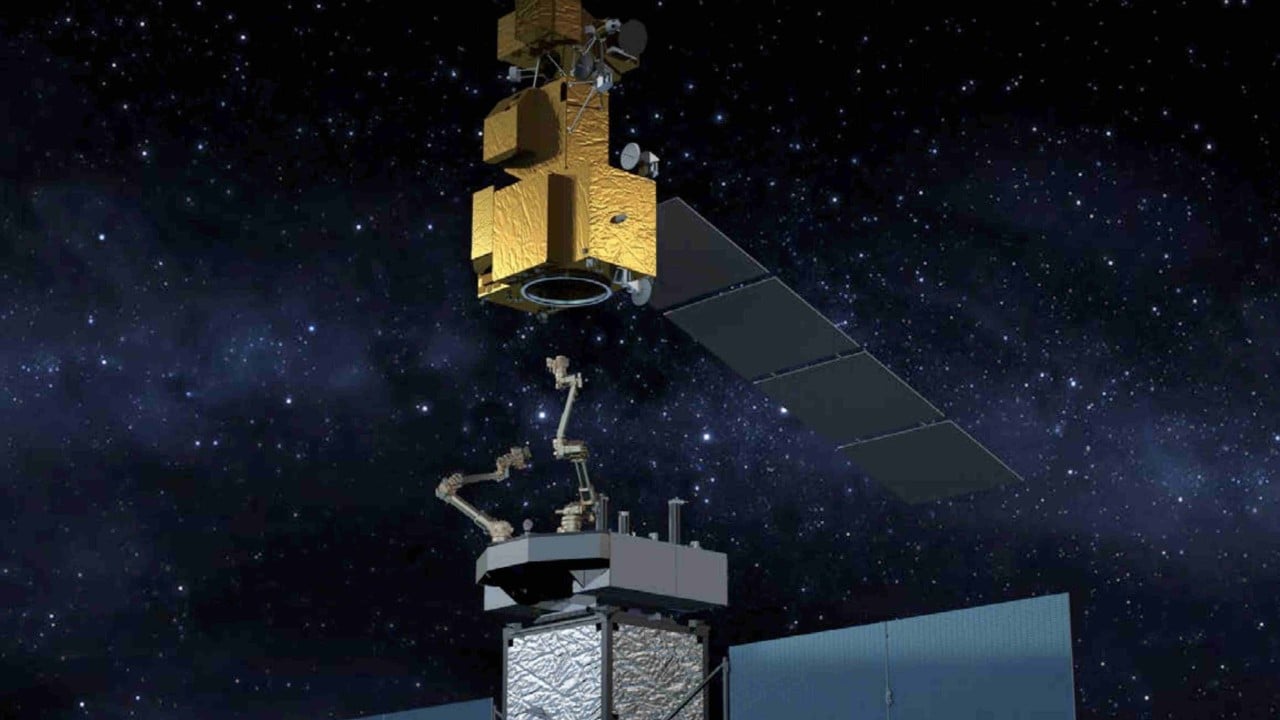
Chinese researchers have reported that a BeiDou satellite was refuelled in orbit, a development that could extend spacecraft lifespans and carry military implications. However, satellite-tracking data cited in the supplied material casts doubt on the claimed February 2025 rendezvous, and neither paper identified an independent source for the operation.
Chinese researchers have reported that a BeiDou navigation satellite was refuelled in orbit, but satellite-tracking evidence cited in the supplied material raises questions about whether the operation took place as described. A paper undergoing peer review for the Journal of Deep Space Exploration said China had provided room-temperature propellant to a high-orbit BeiDou satellite for the first time. The researchers gave no operational details and said further work was needed on transferring extremely low-temperature propellants.
A separate paper by Chinese Academy of Sciences researchers identified the spacecraft as Shijian-25 and BeiDou-2 G7. It said Shijian-25 supplied 142 kilograms of propellant to BeiDou-2 G7 in February 2025, extending the satellite’s lifespan by eight years. In-orbit refuelling could reduce the need to launch replacement satellites when spacecraft run low on fuel.
For a navigation constellation, the reported capability could potentially support longer service and greater resilience. The material also says the technology could be relevant to spacecraft operating between Earth and the Moon. The claims have military significance because fuel enables satellites to manoeuvre in orbit.
General Stephen Whiting, head of US Space Command, warned in January that Chinese refuelling capabilities could offer an advantage during a future conflict in space. However, neither paper cited a source for the reported refuelling. The orbital records described in the material also appear inconsistent with the claimed rendezvous.
BeiDou-2 G7 was tracked in geostationary orbit near 110.5 degrees east, while Shijian-25 was observed near 120 degrees east after disappearing from tracking for six days in January. Jonathan McDowell, a former Harvard astrophysicist and satellite-tracking expert, said the spacecraft’s recorded movements made a rendezvous and refuelling in the stated timeframe implausible. He said the postulated operation could not have happened unless the US Space Force had been tracking the wrong objects.
The South China Morning Post contacted the Chinese research teams for comment, according to the supplied material. It also reports that China is currently the only country known to have carried out satellite-to-satellite refuelling in orbit.
This independently written report is based on information supplied by the named publisher. Vertrix News has not independently verified the source report.