SpaceX’s Starship reaches orbit during 14th test flight
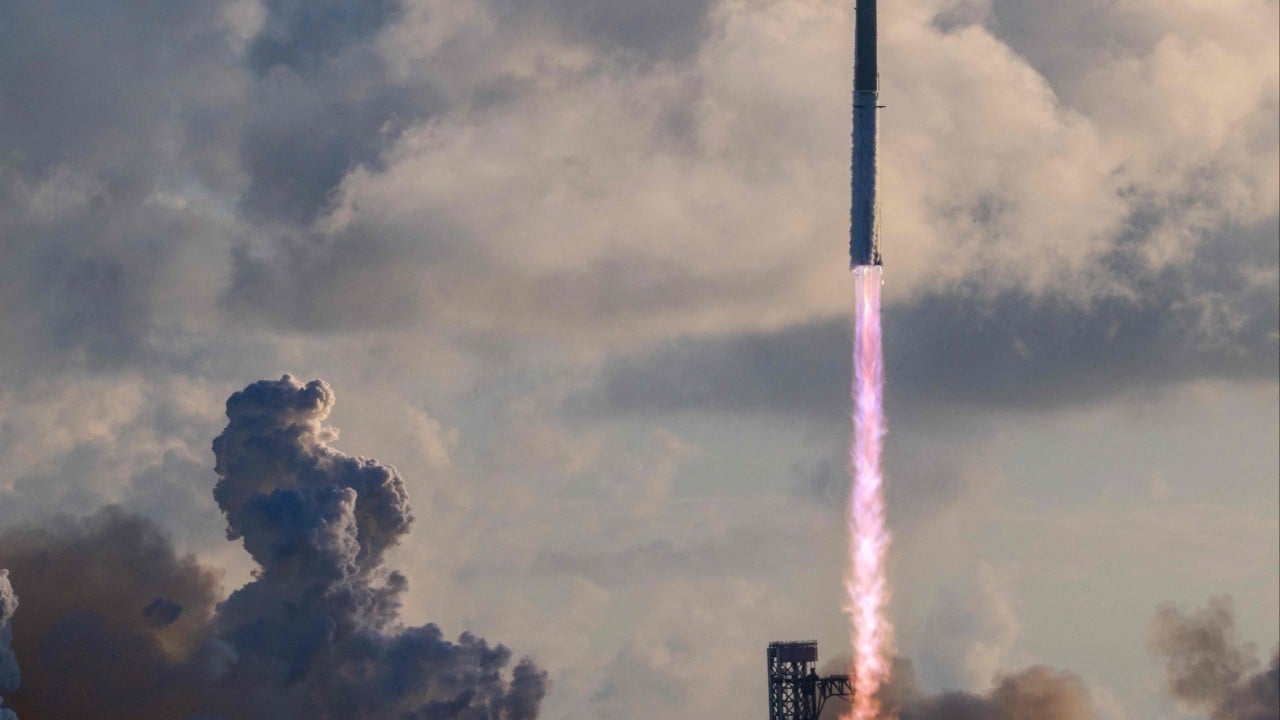
SpaceX’s Starship reached orbit for the first time during an uncrewed test flight from South Texas, despite one Raptor engine failing during ascent. The vehicle carried 26 upgraded Starlink satellites and was scheduled to return through the atmosphere, testing its heat shield and the programme’s path towards reusability.
SpaceX’s Starship reached orbit for the first time on Monday during an uncrewed test flight from the company’s Starbase facility in South Texas, marking a milestone for the rocket programme. The 40-storey vehicle lifted off at 7:49 a.m. local time on its 14th test flight.
It carried 26 upgraded Starlink satellites, which SpaceX intended to deploy into orbit and add to its internet-from-space network. One of Starship’s six Raptor engines failed early in the ascent, briefly putting the orbital attempt at risk. After reviewing the flight data, SpaceX engineers continued the mission and used one of the remaining engines to place the vehicle in orbit.
The satellites began deployment about 35 minutes after launch and were expected to be released within roughly an hour. The spacecraft was scheduled to complete a mission lasting nearly 10 hours before returning to Earth and splashing down in the Pacific Ocean west of Chile. The Super Heavy booster, which carries Starship towards orbit, made a controlled splashdown off the Texas coast about seven minutes after liftoff.
SpaceX also tested the vehicle’s heat shield during the planned atmospheric return. The flight was significant because earlier space launches had deliberately fallen short of orbit to maximise safety. US regulators have now approved the next stage of orbital testing, including the controlled return of the vehicle.
The upgraded Starlink satellites, known as V3s, are production spacecraft intended to join SpaceX’s existing network. The company has said V3 satellites could significantly increase Starlink capacity, although the source material did not independently verify those claims. Starship remains under development as a fully reusable spacecraft.
SpaceX wants to catch both the booster and spacecraft at the launch site, and the company has already caught the Super Heavy booster three times. The programme also depends on future advances in orbital refuelling, heat-shield durability and rapid reuse.
This independently written report is based on information supplied by the named publisher. Vertrix News has not independently verified the source report.