Starship reaches orbit and deploys satellites before early Pacific splashdown
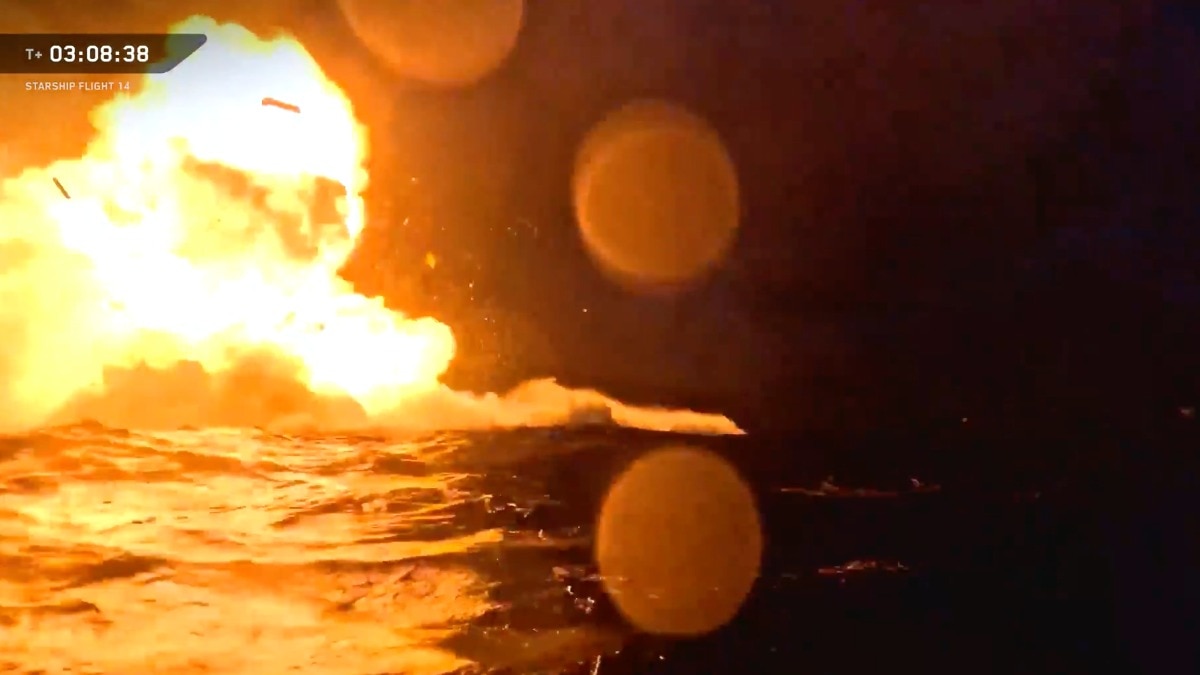
SpaceX’s Starship reached Earth orbit for the first time during its 14th test flight and deployed 26 Starlink satellites. A thruster failure after separation from the Super Heavy booster shortened the mission, leading to a controlled splashdown in the Pacific near Hawaii rather than completion of the planned flight.
SpaceX’s Starship reached Earth orbit for the first time during its 14th flight test but ended the mission early after losing a thruster. The 124-metre rocket lifted off from SpaceX’s Starbase facility in Texas on Monday. The Super Heavy booster separated from the upper stage several minutes after launch, allowing Starship to continue into space.
During the flight, the spacecraft deployed 26 next-generation Starlink satellites. The deployment was a key objective and demonstrated Starship’s ability to carry and release operational payloads in orbit. The mission was expected to last about 10 hours but ended after a little more than three hours.
Following the thruster failure, SpaceX directed the spacecraft towards a controlled splashdown zone in the Pacific Ocean near Hawaii. The flight was Starship’s first attempt to complete an orbit after 13 earlier suborbital tests. Its planned trajectory would have taken it over India, but the early termination prevented that part of the flight.
The result marked progress for SpaceX’s plans to develop a reusable launch system, while also highlighting continuing challenges involving orbital operations, reliable recovery and in-space refuelling. NASA has selected a version of Starship as the lunar landing system for its Artemis programme. SpaceX also plans to use the vehicle for future missions to the Moon and Mars, although further testing is required before it can support crewed lunar flights.
This independently written report is based on information supplied by the named publisher. Vertrix News has not independently verified the source report.