Xi’s absence from UN gathering highlights Beijing’s focus on Washington ties
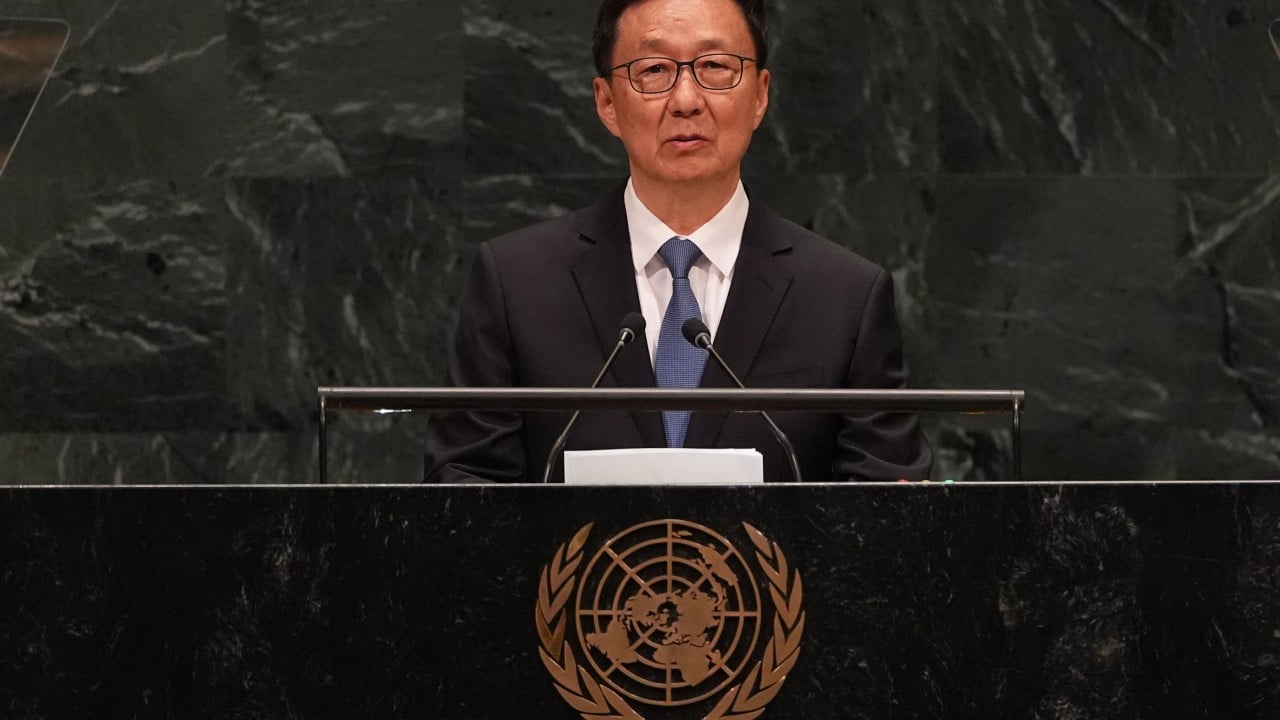
China sent Vice-President Han Zheng to address the UN General Assembly while President Xi Jinping stayed away after a three-day summit with Donald Trump in Washington. Analysts said the decision underscored Beijing’s insistence on parity with the United States, even as China seeks greater influence through multilateral diplomacy.
China’s Vice-President Han Zheng urged major powers to respect the sovereignty and security of Middle Eastern countries and support a two-state solution for Palestinians in an address to the UN General Assembly on Saturday. His appearance came as analysts questioned President Xi Jinping’s decision not to attend the gathering after meeting US President Donald Trump in Washington. Xi’s absence was notable because New York is relatively close to Washington and Beijing has long highlighted the importance of the United Nations.
Bonnie Glaser, managing director of the German Marshall Fund of the United States, said Chinese officials had indicated months earlier that Xi would attend only to mark a major anniversary, calling his non-appearance “a missed opportunity”. Since taking power in 2012, Xi has addressed the General Assembly in person once, in 2015. He appeared by video during the pandemic in 2020 and 2021, while Premier Li Qiang represented China at last year’s 80th-anniversary session.
Other senior officials, including Han and Foreign Minister Wang Yi, have represented Beijing in other years. Analysts said the decision also reflected the importance China places on its relationship with Washington. This week’s summit, like a meeting Trump attended in China in May, was limited to two days and did not include side trips or multilateral events.
Jeffrey Moon, a former US consul general in Chengdu, said Beijing wanted to avoid appearing less important than the United States. Han promoted China’s global development, security, civilisation and governance initiatives, which Beijing presents as supporting prosperity, stability and procedural justice. A Pew Research Centre survey cited in the source found that favourable views of China rose across 20 countries while US favourability declined.
The Global Soft Power Index nevertheless continued to rank the US first and China second. Ryan Hass of the Brookings Institution said China would need to commit resources, rather than rhetoric, to take advantage of any reduced US influence. He cited lower Belt and Road spending and questioned Beijing’s ability to attract countries to its governance model.
Other analysts said China had built strong relationships in the Global South but cautioned that it might not replace the United States’ role. Han’s remarks came amid the continuing war involving Iran, Israel and Gaza. The source said he called for respect for sovereignty and a two-state solution, while reporting that tensions at the assembly had risen after Netanyahu’s speech and that Gaza’s death toll had exceeded 73,600, according to the territory’s Health Ministry.
This independently written report is based on information supplied by the named publisher. Vertrix News has not independently verified the source report.