Xi-Trump summit leaves US-China rivalry steadier, but Beijing sets the terms
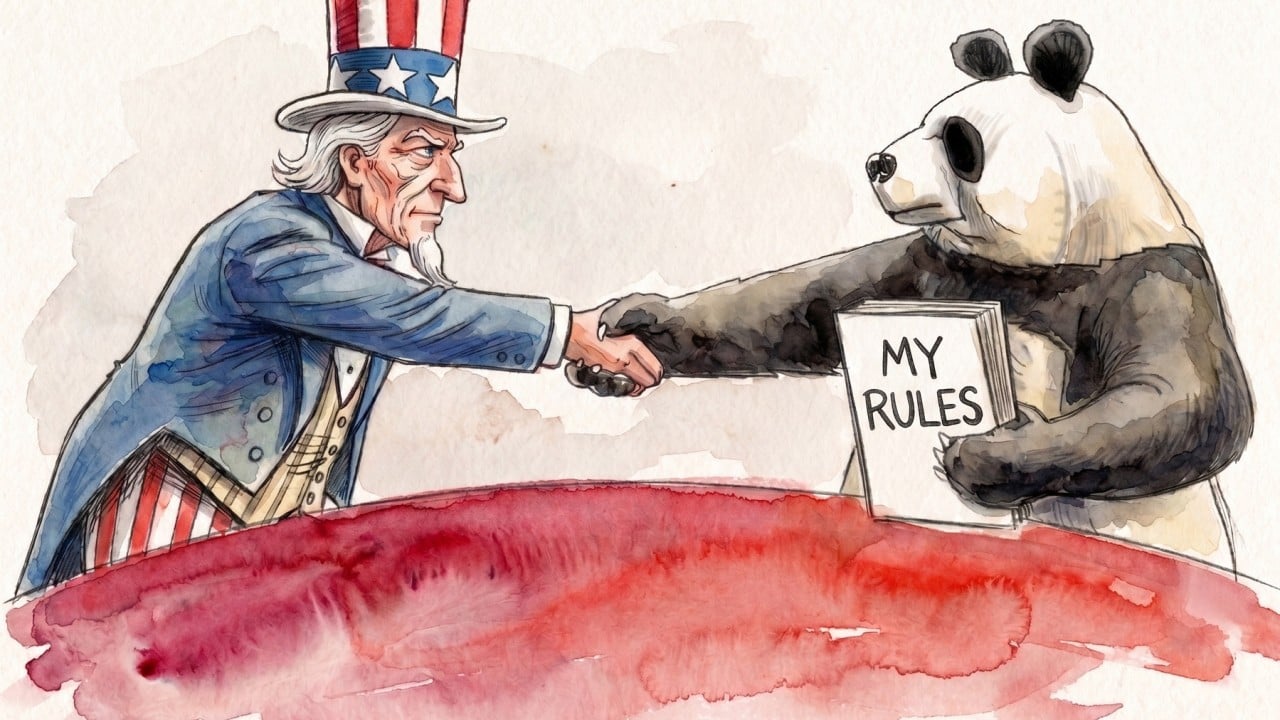
The South China Morning Post says last week’s meeting between Donald Trump and Xi Jinping produced a limited trade truce and renewed dialogue, rather than a broad agreement. It argues that Beijing’s preference for “strategic stability” shaped discussions on trade, artificial intelligence, Taiwan and Iran, while major disputes remained unresolved.
Last week’s meeting between US President Donald Trump and Chinese President Xi Jinping produced a narrower outcome than its ceremonial setting suggested, according to an analysis published by the South China Morning Post. The paper characterised the result as a managed rivalry shaped largely by Beijing’s preference for stability and bounded competition. China’s readout promoted “constructive strategic stability”, with cooperation prioritised, competition restrained and disputes managed to avoid conflict.
Xi said the two countries could overcome the “Thucydides Trap” and described competition as a race to improve rather than a contest in which one side must defeat the other. Trump, meanwhile, called the meeting “great” and returned to the language of friendship. The talks included a new arrangement and an extension of a two-month truce, the analysis said.
It linked the arrangement to earlier proposals involving reciprocal tariff reductions, Chinese purchases of US agricultural products and possible Boeing aircraft sales. The paper argued that China’s dominance of rare-earth mining, processing and magnet production limited Washington’s willingness to escalate trade pressure. Artificial intelligence remained a significant difference.
Xi called for human control and a people-centred approach, while Trump favours deregulation to encourage “superintelligence”. The two sides established an AI dialogue and discussed a US proposal for a notification mechanism, but the analysis said the meeting did not resolve their competing approaches to governance. Taiwan also remained unsettled.
Xi urged Trump to oppose independence and handle the issue carefully. The United States has not formally changed its position from saying it does not support independence, while an approved US arms package for Taiwan remains separate from a larger proposed sale that has been held back. The paper said regular military communication was discussed, without a named mechanism.
On Iran and the Strait of Hormuz, the summit produced no reported breakthrough or communiqué language on navigation. The analysis said Trump sought Chinese help in pressing Iran and reopening the strait, while Xi supported a return to an earlier US-Iran arrangement. US critics described the meeting as “pageantry over purpose”, while Senator Rand Paul argued that more dialogue could reduce the risk of war.
The South China Morning Post concluded that the summit delivered political cover and a pause in tensions, but not a comprehensive settlement.
This independently written report is based on information supplied by the named publisher. Vertrix News has not independently verified the source report.