Beijing deploys billions of wasps as webworm outbreak spreads
Beijing authorities are releasing 1.1 billion parasitic wasps and organising public caterpillar-catching campaigns to contain an outbreak of the invasive North American fall webworm. The pest has covered trees in webs across the capital and nearby areas, while warm and wet weather has complicated pesticide-based control efforts.
Beijing authorities are releasing 1.1 billion parasitic wasps and mobilising residents to catch caterpillars as they try to contain an outbreak of the invasive North American fall webworm. The larvae of Hyphantria cunea have covered trees in Beijing and surrounding areas this summer. They spin greyish-white webs while feeding on foliage.
The insects do not harm people, but China Science Daily reported that they threaten hundreds of plant species. Chen Min, a Beijing Forestry University professor, said this generation had an unusually high potential to spread. A warm winter and rainy summer had created favourable conditions, while wet weather reduced the effectiveness of pesticides by washing them away.
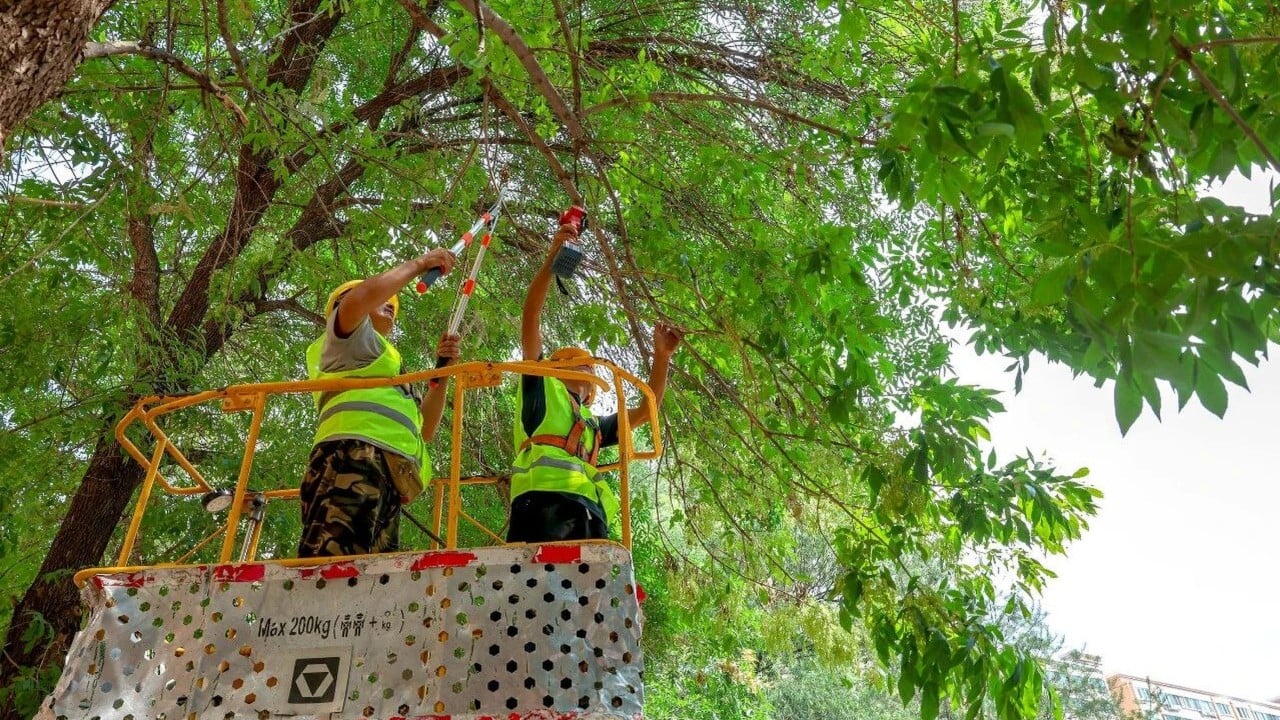
Municipal workers have been removing webs, trapping moths and applying pesticides. Almost 3,000 monitoring sites have been established around Beijing, according to Xinhua, to help direct control measures. Authorities have also encouraged residents to report affected trees and introduced caterpillar-catching competitions as part of community efforts.
The parasitic wasp Chouioia cunea, discovered in the 1980s, acts as a natural predator of the webworm. Beijing has released 1.1 billion of the wasps in an effort to reduce the pest population. The fall webworm is native to the United States, Canada and Mexico.
It was accidentally introduced to Europe in the 1940s and has since spread through Europe and Asia. Chen said it was first identified in China in 1979 and is now present in 13 provincial-level areas. The caterpillar feeds on many plants, including mulberry, ash and plane trees commonly found along Chinese streets.
A female moth can lay hundreds of eggs, and the species produces three generations each year. The current outbreak is the third generation, while the first, appearing around May, is considered the most important to target. Chen said the outbreak highlighted weaknesses in China’s control efforts.
He called for better coordination and adaptation, particularly as climate change expands the areas where the pest can survive.
This independently written report is based on information supplied by the named publisher. Vertrix News has not independently verified the source report.