Hong Kong athlete combines Chinese and Western approaches to injury recovery
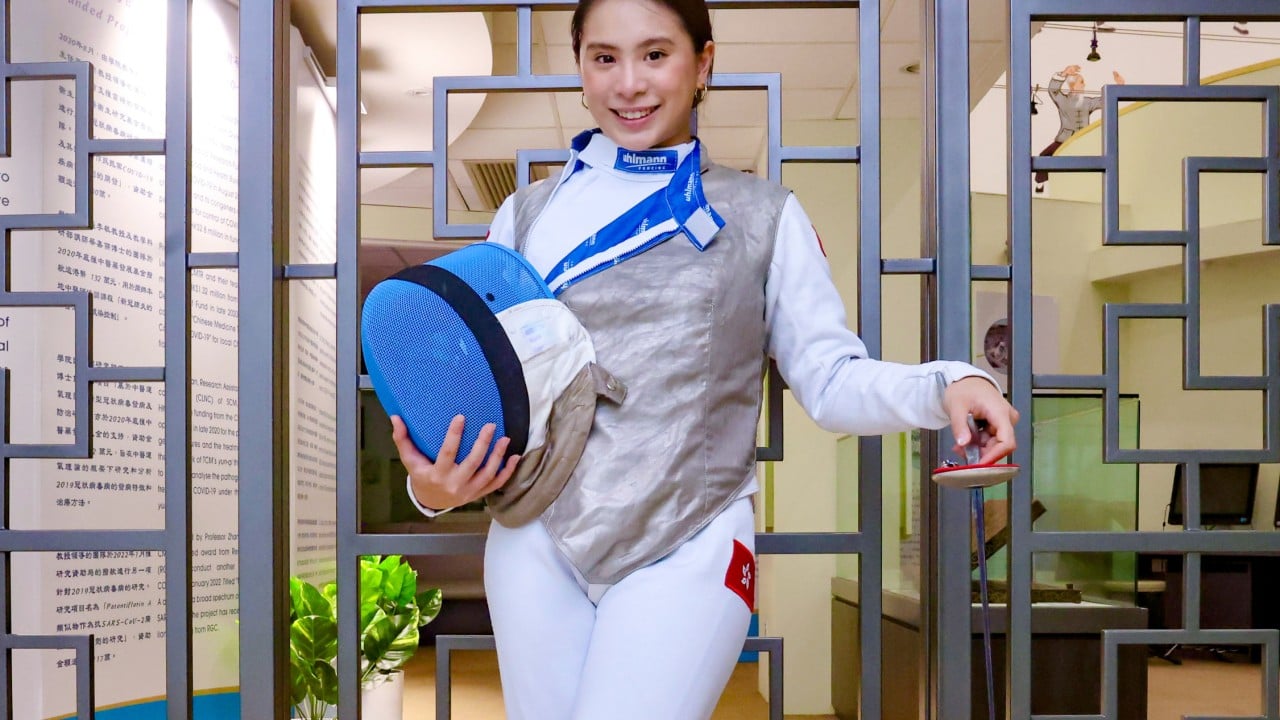
Hong Kong fencer Janelle Leung used acupuncture alongside physiotherapy after suffering a partial ankle-ligament tear before an international competition. Practitioners say traditional Chinese medicine can help manage symptoms, but serious injuries require hospital assessment, while safe return to sport should be based on strength, movement and sport-specific testing.
Hong Kong fencer Janelle Leung Ya-lei used acupuncture alongside Western sports medicine after suffering a partial tear to an ankle ligament shortly before an international competition. Leung, who helped Hong Kong win a bronze medal in the women’s foil team event at the 2026 Asian Games and is ranked 53rd in the world, sustained the injury in April, seven days before the Cairo Foil World Cup. Away from her usual medical team, she drew on her studies in traditional Chinese medicine at Baptist University.
She treated selected acupuncture points each night after training, saying the approach helped reduce swelling and pain and allowed her to train before competing. After returning to Hong Kong, she underwent physiotherapy at the Hong Kong Sports Institute to rebuild ankle strength progressively. Dr Cheung Yung, a traditional Chinese medicine practitioner, said active people commonly seek treatment for sprained ankles, calf injuries, Achilles pain and joint problems linked to sports involving sudden stops and starts.
He distinguishes between injuries caused by accidents and those that develop through repeated strain. Cheung said practitioners assess injuries through observation, questions, physical examination and palpation, while also considering issues such as metal allergies, blood-thinning medication and blood disorders that could make acupuncture unsuitable. Imaging such as X-rays can help clarify the diagnosis.
He said patients who cannot bear weight, have severe swelling or suffer serious pain should go to hospital first. A fracture or complete rupture requires surgical care, he said, rather than needling. Professor Amy Ng Pui-pui of the University of Hong Kong said integrated care works best when practitioners share the same diagnosis, objectives and recovery plan.
Family doctors can identify warning signs and arrange imaging, physiotherapists can lead rehabilitation, and Chinese medicine practitioners may help manage symptoms. Ng said return-to-sport decisions should rely on strength, function, movement quality and sport-specific tests. Cheung advised patients with uncomplicated soft-tissue injuries to wait two weeks after swelling, bruising and pain had disappeared and movement had returned, warning that being pain-free did not necessarily mean being ready to train.
This independently written report is based on information supplied by the named publisher. Vertrix News has not independently verified the source report.