NASA’s Swift observatory burns up after 22 years studying cosmic explosions
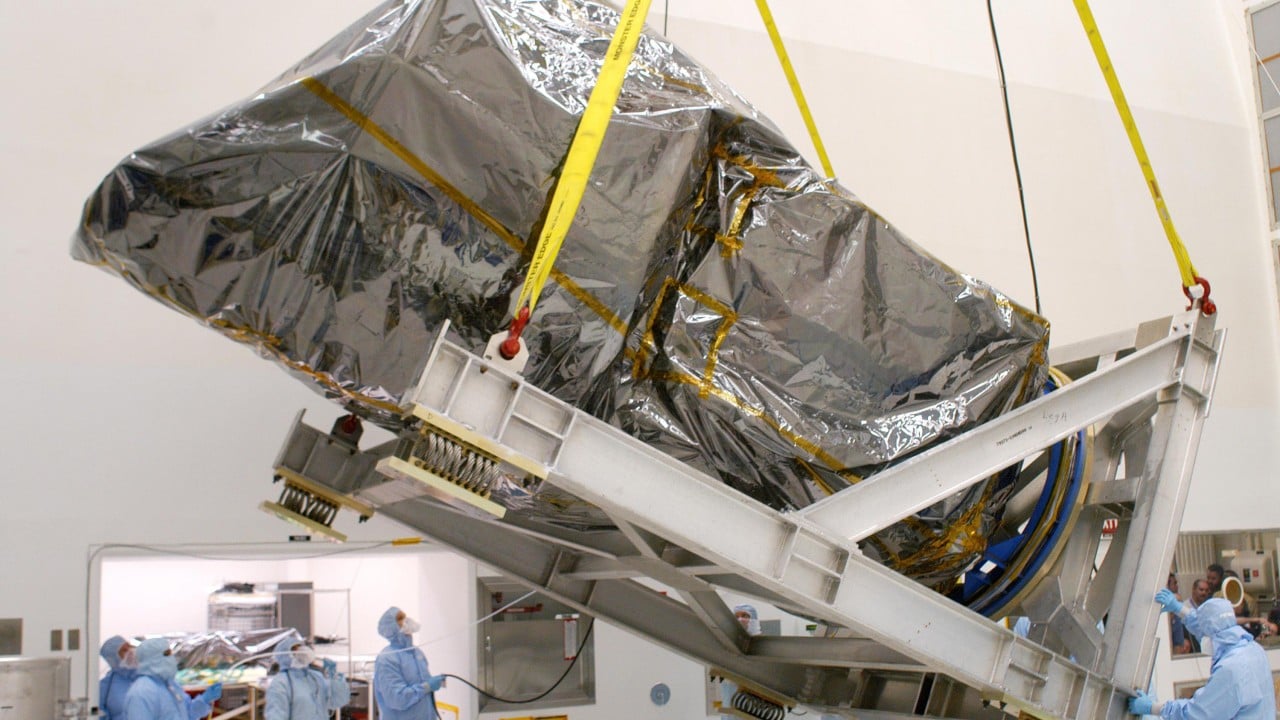
NASA’s Swift space telescope has re-entered Earth’s atmosphere over Indonesia, ending a mission that lasted 11 times longer than planned. The agency expected most of the 1.5-tonne observatory to burn up, although some fragments may have survived; reports differed on whether NASA had confirmed the exact amount of debris.
NASA’s Swift space telescope has re-entered Earth’s atmosphere over Indonesia, ending a 22-year mission that transformed the study of gamma-ray bursts and other violent events in the universe. The US Space Force said the observatory came down at 7.39am over North Sumatra, travelling at about 22 times the speed of sound. Swift, also known as the Neil Gehrels Swift Observatory, weighed roughly 3,200 pounds, or 1,452 kilograms.
The South China Morning Post reported that NASA expected frictional heat to destroy most of the satellite high above the surface, although some fragments could survive. The report said no damage or injuries had been recorded on the ground. ABC News Australia described the spacecraft as a 1.5-tonne telescope and said NASA had not yet confirmed how much of it burned up.
The differing accounts reflect the uncertainty surrounding the final descent: NASA anticipated that denser pieces might reach Earth, but the precise quantity of surviving material was not immediately known. The observatory’s re-entry point was near Indonesia’s North Sumatra province, about 322 kilometres north of the equator. The reports did not establish how close the falling satellite came to Medan, a city of roughly 2.5 million people.
The Space Force had previously assessed the risk to populated areas as very low, estimating the chance of anyone on Earth being harmed at one in 2,100. Aerospace engineer Dean Sladen told the South China Morning Post that only a handful of small, scorched fragments were expected to survive and that nothing recognisable as a telescope was likely to reach the ground. He said satellites of this size re-enter regularly and that no one had been killed by falling space debris in nearly 70 years of spaceflight.
Swift was launched in 2004 with a planned operating life of two years. It ultimately worked for 11 times that period, using three telescopes operating across multiple wavelengths to respond rapidly to gamma-ray bursts, the most powerful known explosions in the cosmos. During its mission, the observatory also examined hundreds of supernovae, black holes tearing apart stars, stellar X-ray flares, asteroids and comets.
Its work contributed to about 7,000 published scientific papers. NASA ended operations on October 20, after the satellite’s orbit had become increasingly unstable. Swift had no propulsion system of its own, leaving it dependent on outside intervention if its orbit deteriorated.
NASA and the Arizona-based company Katalyst launched a rescue spacecraft called Link in July to attach to the observatory and raise it into a more sustainable orbit. The attempt failed after Link began spinning uncontrollably, and mission managers abandoned it in mid-August. The failed rescue has also focused attention on NASA’s older Hubble Space Telescope.
ABC News Australia reported that the agency is seeking proposals from private companies to boost Hubble’s orbit, upgrade its systems, guide it towards a controlled re-entry, or undertake all three. Hubble’s re-entry is expected in the mid-2030s, but any rescue effort would need to take place by 2032.
Vertrix News compared the attributed reports listed below and wrote this independent synthesis. Claims remain attributed where independent verification was unavailable.
Sources
- South China Morning Post
- ABC News Australia