Pezeshkian signals nuclear flexibility but faces hard-line constraints
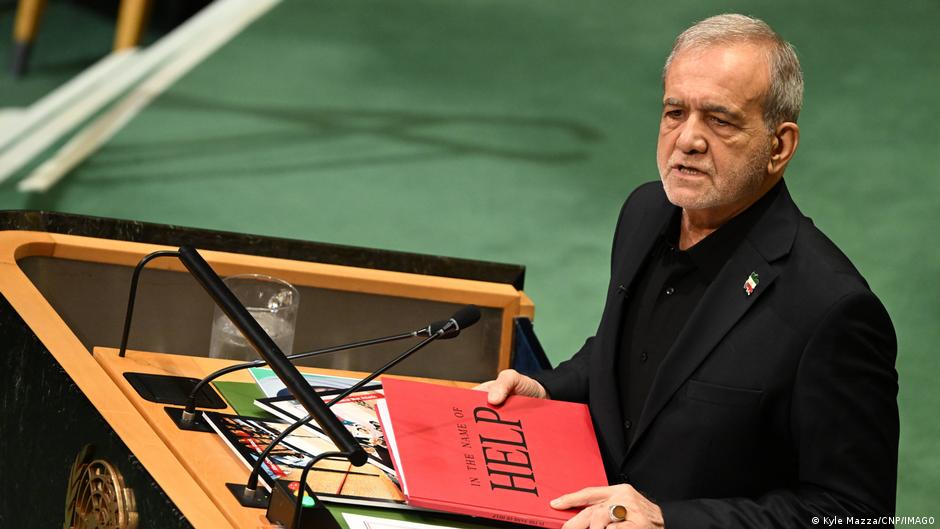
Iranian President Masoud Pezeshkian has signalled openness to meeting international nuclear obligations while rejecting the goal of developing a nuclear weapon. Analysts told DW that Iran’s hard-liners and Revolutionary Guard retain major influence, limiting the president’s ability to negotiate a broad de-escalation with Washington.
Iranian President Masoud Pezeshkian has adopted a diplomatic tone in New York, signalling a willingness to comply with international nuclear obligations while denying that Tehran seeks a nuclear weapon. In an interview with Fox News, Pezeshkian said Iran would comply with international law and the Nuclear Non-Proliferation Treaty when asked whether it would hand over highly enriched uranium. He rejected the suggestion that Iran wanted a bomb, citing religious rulings against weapons of mass destruction.
The International Atomic Energy Agency has estimated that Iran possesses more than 440 kilogrammes of uranium enriched to up to 60%. Since US-Israeli attacks on Iranian nuclear facilities in 2025, Iran has suspended cooperation with the agency, which continues to seek access and information. Arman Mahmoudian, an Iran expert at the University of South Florida, told DW that Pezeshkian could not independently initiate a comprehensive de-escalation.
He said hard-liners and the Islamic Revolutionary Guard Corps continued to exert considerable influence. Mahmoudian nevertheless said the president’s visit could help establish a direct communication channel and create a framework for later negotiations. The White House has said positive and constructive discussions were continuing through intermediaries.
The Strait of Hormuz is also central to the talks. Iranian Foreign Minister Abbas Araghchi reportedly proposed reopening the waterway within seven days if conditions were met. The precise conditions remain unclear, though Iran has previously sought sanctions relief, the release of frozen assets and an end to a US blockade.
Mahmoudian expects Tehran to combine military pressure with diplomacy while rebuilding damaged infrastructure. US Secretary of State Marco Rubio said a deal would require time and difficult negotiations, lowering expectations of an immediate agreement.
This independently written report is based on information supplied by the named publisher. Vertrix News has not independently verified the source report.