Poll finds Merkel more capable than Merz, according to 48% of Germans
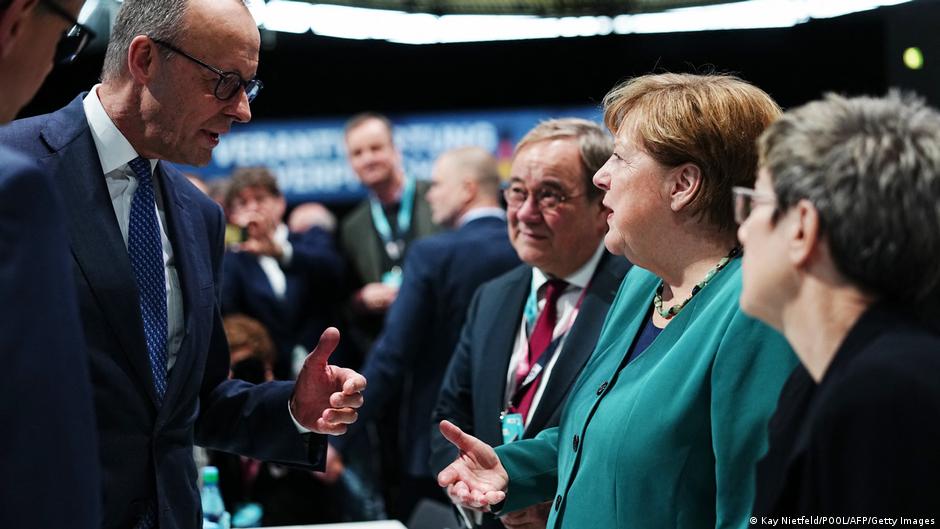
A YouGov survey commissioned by German news agency DPA found that 48% of respondents considered former Chancellor Angela Merkel better equipped than current Chancellor Friedrich Merz to address Germany’s challenges. The findings come as Merz faces low approval ratings and visits Kyiv unannounced.
Almost half of Germans believe former Chancellor Angela Merkel is better suited than current Chancellor Friedrich Merz to address the country’s challenges, according to a YouGov survey commissioned by German news agency DPA. The poll found that 48% of respondents favoured Merkel. A further 29% considered the two leaders equally capable, while 8% said Merkel was less suited than Merz.
Fifteen per cent either did not answer or said they did not know. Merkel and Merz are members of the centre-right Christian Democratic Union, but have long been political rivals. Merkel served as chancellor from 2005 to 2021, while Merz became chancellor in May of the previous year.
The survey comes as Merz faces record-low approval ratings since taking office, according to the report. Germany’s challenges cited in the coverage include a stagnant economy, rising energy prices, an ageing population, illegal immigration and foreign-policy pressures linked to Russia’s invasion of Ukraine. Merz was visiting Kyiv on an unannounced trip alongside Economy Minister Katherina Reiche and other senior German economic figures.
He was expected to announce additional military aid for Ukraine as the country faced its fifth winter during Russia’s ongoing invasion. The weekend also included official German Unity Day events in Bremen. President Frank-Walter Steinmeier warned that democracy was again being challenged, pointing to the threat from right-wing extremism.
Thousands of people demonstrated in Berlin and Stuttgart against war, military expansion and possible conscription. Police estimated that 5,800 people attended the Berlin protest, while organisers gave a figure of 20,000. Organisers in Stuttgart estimated attendance at about 15,000, although journalists put the number in the low to mid thousands.
The economic gap between eastern and western Germany was also highlighted. An analysis by the German Economic Institute said the five eastern states reached just under 79% of western Germany’s economic level in 2025, compared with 51% in 1991. The researchers said convergence had stalled in recent years.
This independently written report is based on information supplied by the named publisher. Vertrix News has not independently verified the source report.