Smithsonian uses AI to map connections in Revolutionary-era collections
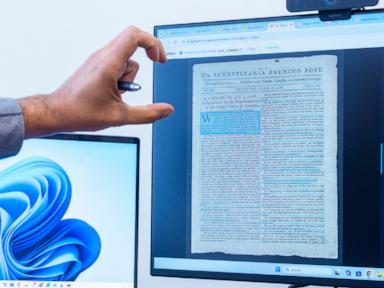
The Smithsonian is applying artificial intelligence to about 10,000 objects linked to people who lived between 1770 and 1810. The Revolution Crossroads project aims to connect records across institutions, helping researchers uncover relationships and stories that could be missed through traditional catalogue searches.
The Smithsonian Institution is using artificial intelligence to identify connections among objects and records linked to the American Revolution, as it prepares for the United States’ 250th anniversary of independence. The project, called Revolution Crossroads, focuses on about 10,000 objects associated with people who lived between 1770 and 1810. Researchers began applying AI models in the spring, using the technology to search records across the Smithsonian and other institutions, including the Library of Congress.
The system has already produced connections that would previously have required extensive searches across separate catalogues. One example involved a silversmith who advertised a creamer around 1774 that resembled an item held by the Smithsonian’s National Museum of American History. The project’s longer-term aim is to uncover information about people whose lives have received less attention than those of prominent figures such as George Washington and Thomas Jefferson.
Becky Kobberod, the Smithsonian’s chief digital and innovation officer, said the institution hoped the work could add to the public record by identifying people who helped build their communities. To make the project possible, Smithsonian staff have digitised, and in some cases digitised again, objects and associated records so they can be processed by AI. The records are available for public searches online.
Natalie Buda Smith, the Library of Congress’s director of digital strategy, said the work could assist researchers who were unsure where to begin. She said a discovery at one institution should not be treated as the end of a story, because related material may exist elsewhere. Kobberod said the Smithsonian was not using the frontier AI models that have attracted scrutiny in recent weeks.
She acknowledged concerns about the technology and said trained historians review the results. Human specialists can identify nicknames, generic terms and other historical nuances that an automated system might misunderstand, she said.
This independently written report is based on information supplied by the named publisher. Vertrix News has not independently verified the source report.