Cancer research and tobacco control raise Hong Kong’s profile, global body says
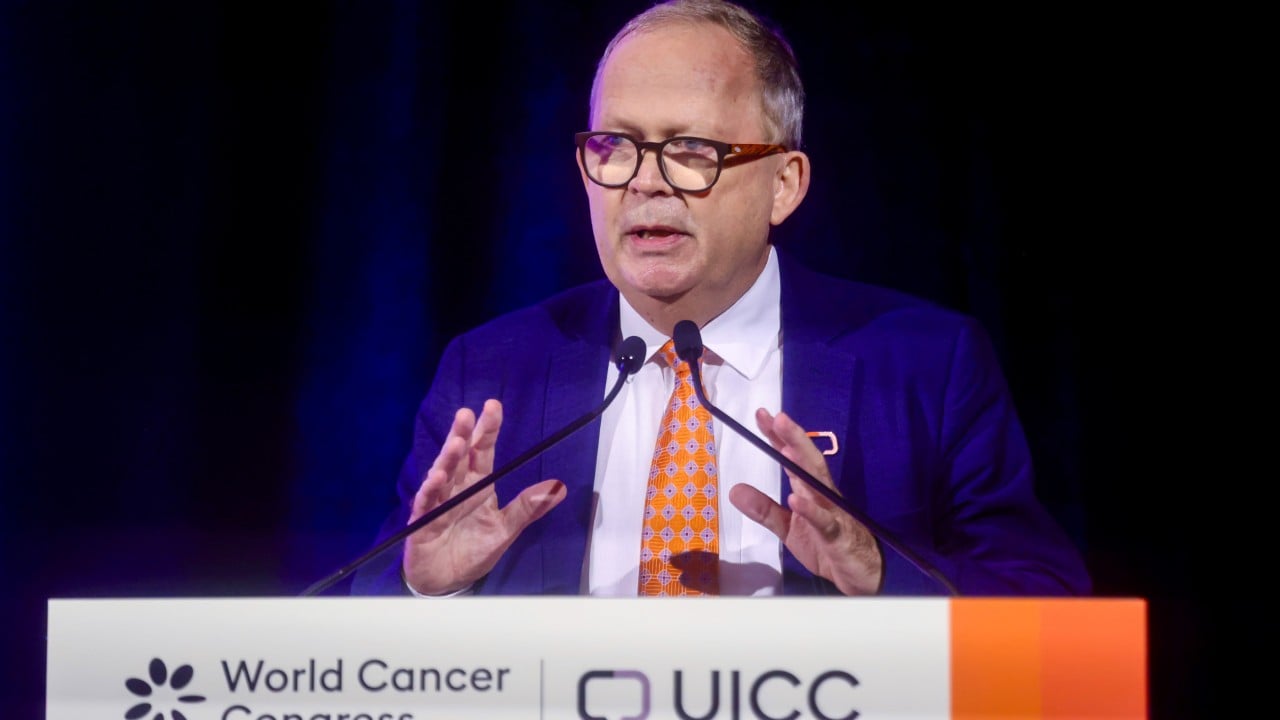
Cary Adams, chief executive of the Union for International Cancer Control, says Hong Kong is becoming an important centre for cancer research and offers lessons through its long-term reduction in smoking. The city hosted the World Cancer Congress, attended by more than 2,000 delegates from 124 countries.
Hong Kong is attracting international attention as a centre for cancer research while offering a model for reducing tobacco use, according to Cary Adams, chief executive of the Union for International Cancer Control. Adams spoke to the South China Morning Post during the World Cancer Congress, which was held in Hong Kong for the first time in late September. He said the organisation wanted to understand research developments in China and the wider region, where he expected further advances in cancer treatment and understanding.
He also praised Hong Kong’s tobacco-control record. The city’s smoking rate fell from 23.3 per cent in 1982 to 8.5 per cent last year, figures Adams described as exceptional. He said other countries could study the policies and methods behind that reduction.
The congress brought together more than 2,000 healthcare delegates from more than 124 countries. Adams said the event could support Hong Kong’s ambition to become an international hub for health and medical innovation by creating opportunities for partnerships and exchange. Professor Anne Lee Wing-mui, vice-chairwoman of the Hong Kong Anti-Cancer Society, said the city could make a larger contribution to global cancer research.
She said cancers such as liver and lung cancer can have different characteristics among Asian and Western patients, creating a case for regionally focused studies. Lee said 12,000 cancer-related academic papers published between 2021 and 2025 had at least one Hong Kong co-author, with 15 per cent appearing in top journals. She said Hong Kong had credibility in conducting research to international standards.
She also pointed to the Greater Bay Area’s population of 86 million as a potential resource for clinical trials. Adams said Hong Kong’s links with mainland China could provide access to researchers, oncologists and patients, strengthening its competitive position in cancer research.
This independently written report is based on information supplied by the named publisher. Vertrix News has not independently verified the source report.