Chinese researchers link seawater hydrogen production with freshwater recovery
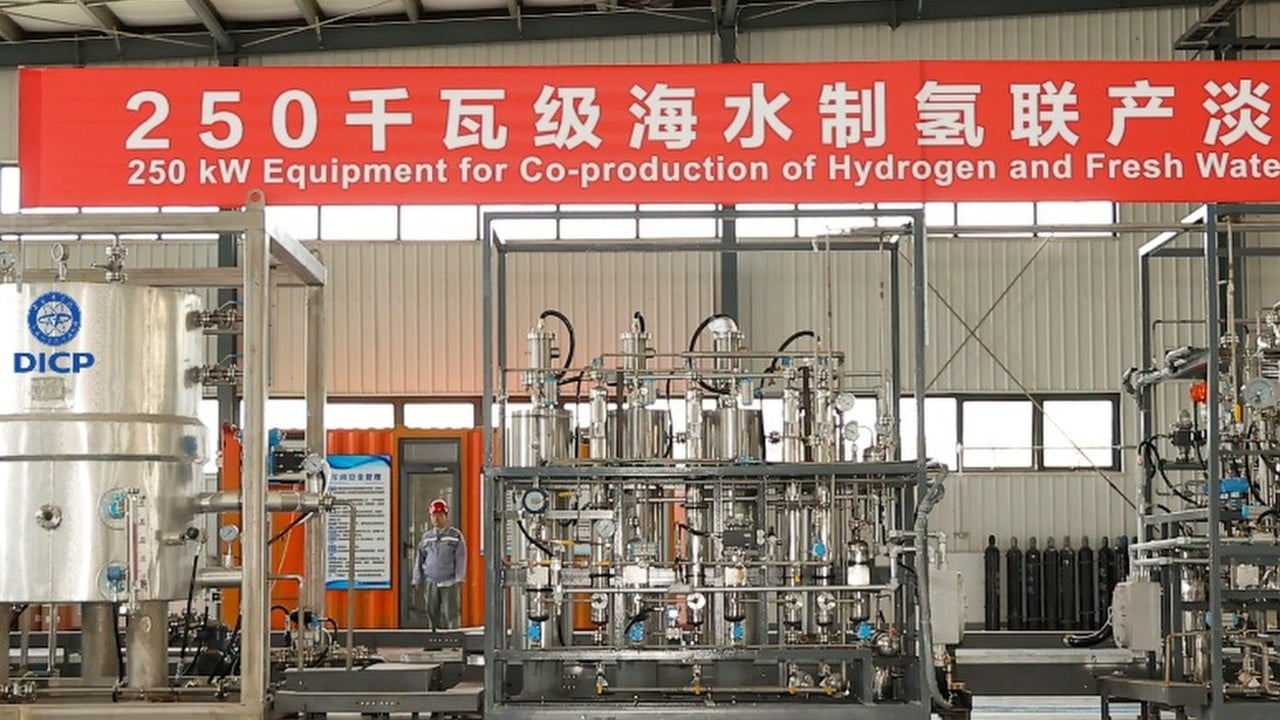
Scientists at China’s Dalian Institute of Chemical Physics have built a 250-kilowatt system that produces hydrogen and freshwater from seawater while recovering other marine resources. The study says the plant improved electricity utilisation by 14.4 per cent and operated for 40 days without an obvious decline in performance.
Chinese scientists have developed a small co-production plant designed to extract hydrogen and freshwater from seawater while also recovering uranium, bromine and other marine resources, according to a study published in Nature Energy. The team, led by Deng Dehui and Liu Yanting of the Chinese Academy of Sciences’ Dalian Institute of Chemical Physics, built a 250-kilowatt plant after developing a 25-kilowatt unit in 2023. The system addresses difficulties associated with direct seawater electrolysis.
Chloride ions can corrode the anode, while calcium and magnesium can create scale on the cathode and reduce efficiency. Conventional systems instead desalinate seawater before electrolysis, but that process requires substantial equipment and electricity. The researchers linked an electrolysis system to a vacuum distillation tower.
Waste heat generated during electrolysis drives seawater evaporation at between 40 and 50 degrees Celsius. The vapour is then condensed into freshwater, producing enough water to operate the electrolyser and leaving an additional amount, according to a Chinese Academy of Sciences release. The plant can produce 380,000 standard cubic metres of hydrogen annually, with a reported purity of 99.9999 per cent, as well as 256 tonnes of freshwater.
Remaining concentrated seawater can be processed in stages for salt, uranium, bromine and other resources. The study reported a 14.4 per cent improvement in electricity utilisation compared with traditional alkaline water electrolysis. The system ran for 40 days under daily start-stop conditions without an obvious decline.
The paper estimated hydrogen costs of US$2.1 per kilogram using onshore wind power and US$2.9 using solar power, depending on electricity prices. The researchers said future work should improve catalysts, heat recovery and process controls.
This independently written report is based on information supplied by the named publisher. Vertrix News has not independently verified the source report.