Orange Order march proceeds through Portadown’s Garvaghy Road after court ruling
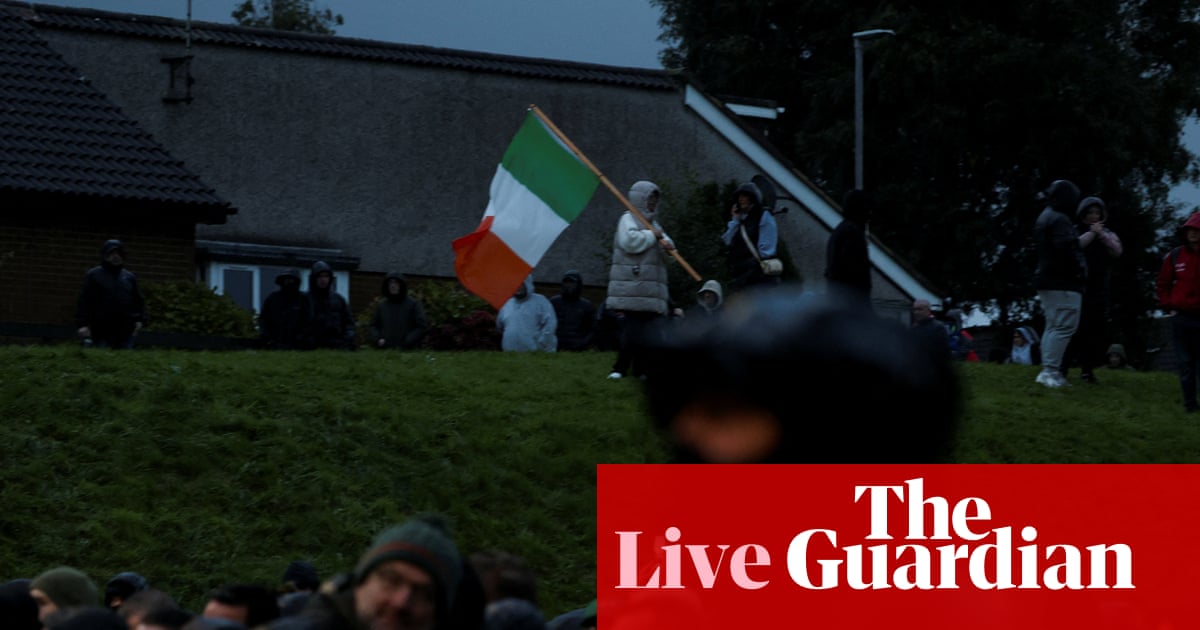
A controversial Protestant parade has begun in Portadown after an appeals court upheld permission for the Orange Order to use the mainly Catholic Garvaghy Road. The route had been barred for almost three decades following violence, while residents and nationalist politicians opposed the decision and protested ahead of the march.
A controversial Orange Order parade has begun in Portadown after an appeals court upheld permission for the procession to pass along the mainly Catholic Garvaghy Road, a route at the centre of sectarian disputes in Northern Ireland. The march started at 8am on Sunday from Drumcree church and was due to continue through the town. The Parades Commission had stipulated that only 35 people could take part, that the event must finish by 9.30am, and that supporters and bands would not be allowed.
The court ruling came at about 2.15am, after the appeals court overturned a High Court decision made on Saturday that had temporarily prevented the procession. Residents of Garvaghy Road had challenged the commission’s decision to permit the route. Hundreds of protesters gathered overnight and into Sunday morning to block the road.
Images from the scene showed people linking arms several rows deep, while Sinn Féin described the gathering as thousands standing in solidarity with residents. Heavy rain fell as crowds assembled. Northern Ireland’s First Minister, Michelle O’Neill, who is also vice-president of Sinn Féin, condemned the decision.
She called the ruling “primitive stuff in the year 2026” and said there was “no going back” for opposition to the march. Sinn Féin said it rejected what it called an unwanted sectarian parade. The Orange Order, a prominent organisation within unionism, maintains that Garvaghy Road forms part of its traditional route.
Unionists have said Catholics have “nothing to fear” from the procession. The route was last permitted in 1998, when clashes and a wave of violence followed. That period saw thousands of public-order incidents across Northern Ireland, including murders.
The route was subsequently banned, and the dispute became one of the defining flashpoints of the conflict known as the Troubles.
This independently written report is based on information supplied by the named publisher. Vertrix News has not independently verified the source report.